Scheduled Monitoring: Keep Clearly Defined Work Moving Through the Growth Loop
Checking creative performance, monitoring spend, logging anomalies—the rules already exist, yet someone still has to open the dashboard every day. Scheduled Monitoring keeps that work moving within Guardrails, and every cycle's output separates what was handled, what needs your approval, and what needs review.
In the previous article, we covered Skills: turning proven team methods into reusable capabilities.
But once the method is clear, another question remains: how does that method keep running on schedule?
Checking creative performance, monitoring spend, logging anomalies, and routing pending items are not complex tasks. The rules already exist. Yet someone still has to open the dashboard, review the data, record the outcome, and move the next step forward.
That is where GrowthGPT 2.0's Scheduled Monitoring comes in.
In GrowthGPT, Scheduled Monitoring is powered by two capabilities working together: Scheduled Tasks and Custom Rules.
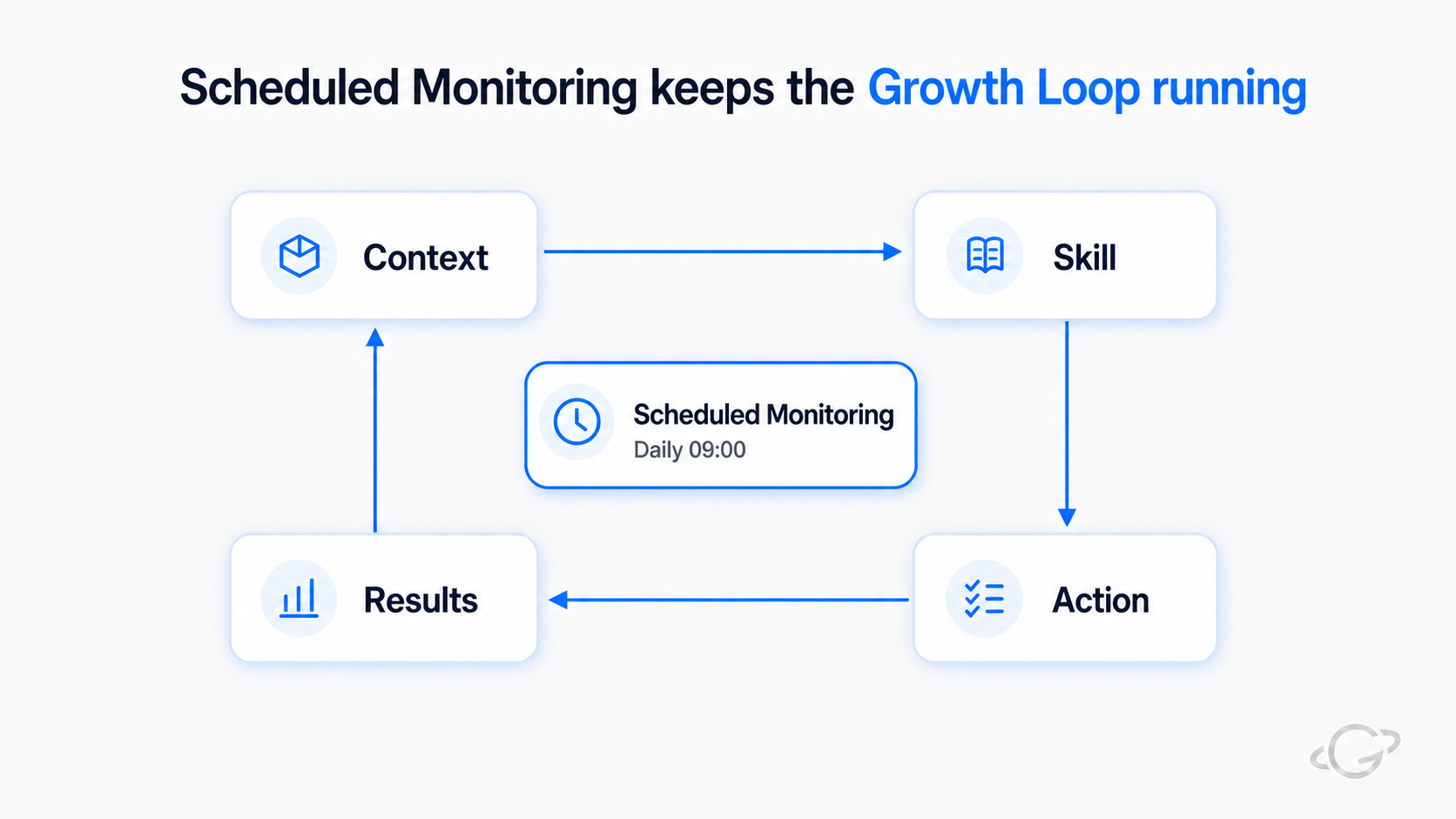
It automates execution, not strategy: the repeatable work your team has already defined keeps moving through the Growth Loop.
Rules Already Exist. Why Is the Team Still Busy?
Growth teams often have recurring work such as:
- Checking creative performance on schedule
- Monitoring budget pacing
- Flagging low-performing assets that meet defined conditions
- Recording anomalies and notifying the right owner
- Summarizing handled items, pending approvals, and items that need review
These workflows usually do not need a new strategic decision every time.
But having rules is not the same as having rules that run consistently.
Someone still has to remember the timing, open the dashboard, pull the data, review the result, log what happened, and push the next step forward.
The real drain is not deciding whether a rule should exist. It is keeping every established rule running.
Scheduled Monitoring gives clearly defined work a reliable rhythm, so it does not have to restart from zero every day.
Define the Boundaries Before You Automate
The most important growth decisions should remain human decisions.
People set the objective, choose the direction, decide whether the current priority is scale or efficiency, shape the creative strategy, and determine acceptable risk.
Systems are best suited to work that is:
- Clearly defined
- Repetitive
- Risk-controlled
- Already approved by the team
That is why Scheduled Monitoring is not fully autonomous media buying.
Teams define the cadence, conditions, handling method, and approval boundaries. GrowthGPT then keeps the work moving within those Guardrails.
When an item has meaningful impact, falls outside the rules, or cannot be explained by the current method, GrowthGPT prepares the data, evidence, and recommendation for human judgment.
Every Cycle's Output Should Make Three Things Clear
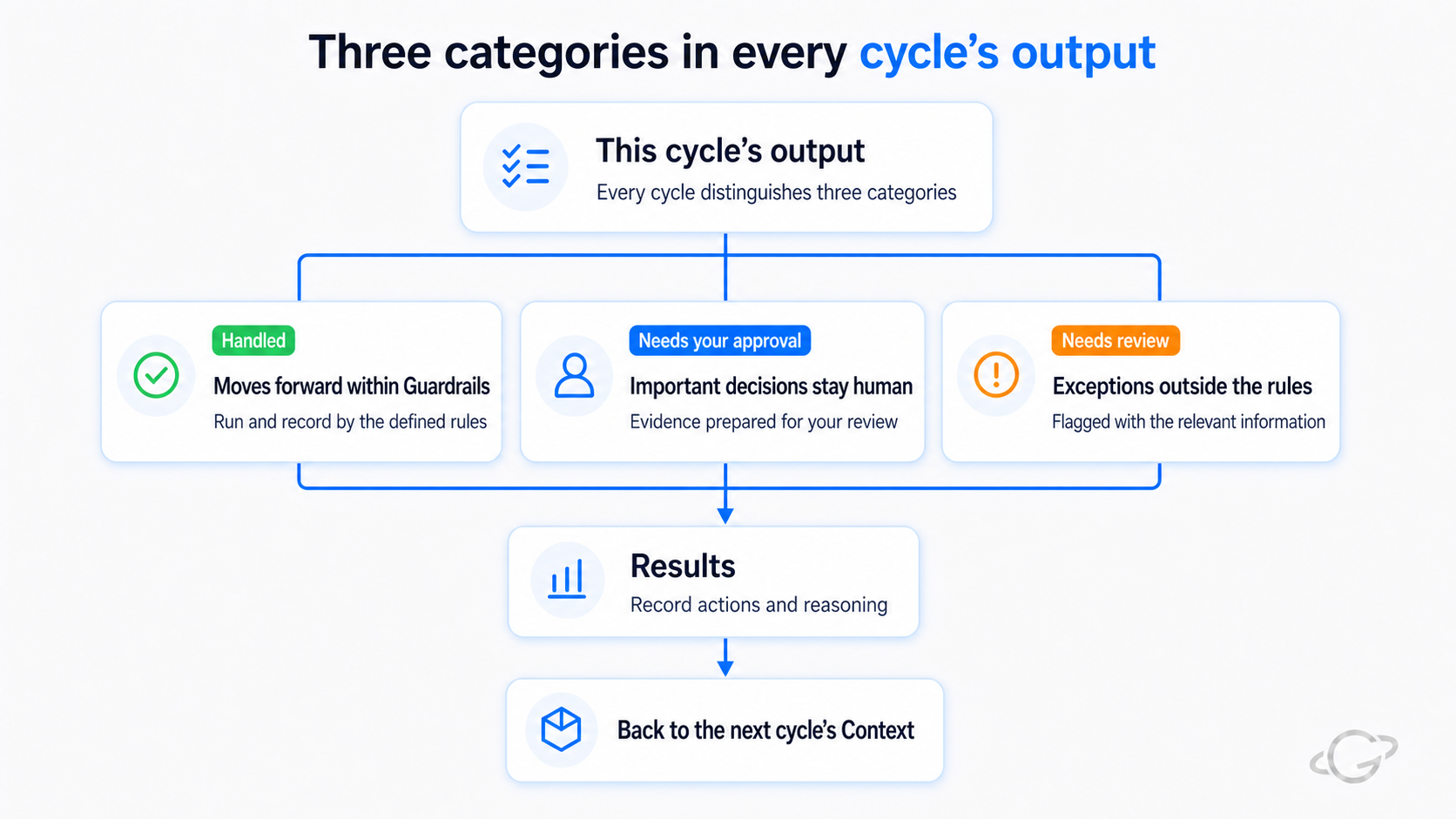
The value of Scheduled Monitoring is not just finding an issue. It is distinguishing what has been handled, what needs your judgment, and what needs your attention—in every cycle's output.
Handled: Within Guardrails
When an item meets predefined conditions and falls within the team's Guardrails, GrowthGPT moves it forward according to the defined rules and records the action and reasoning in the cycle's output.
The team does not need to re-approve every routine action, but it can still see what happened and why.
Needs Your Approval: Consequential Decisions
Meaningful budget changes, formal publication, or decisions with broader strategic impact should not proceed automatically.
GrowthGPT presents the relevant data, evidence, and recommendation in the cycle's output for you to review before proceeding.
The decision remains with the team, without requiring anyone to start the investigation from scratch.
Needs Review: Exceptions Outside the Rules
Unexpected volatility, missing data, platform changes, or patterns the current rules cannot explain should not be forced into a generic action.
GrowthGPT flags the exception and preserves the relevant information in the cycle's output for your review.
Good automation does not try to finish everything automatically. It keeps routine work moving and makes exceptions visible.
These three categories are recorded as Results and return to Context for the next cycle.
Scheduled Monitoring Gives the Growth Loop Its Rhythm
A platform rule can pause an asset when one metric crosses a threshold.
But a complete Growth Loop needs more than a threshold.
It needs the current objective, historical patterns, the team's Skills, clear Guardrails, and the outcome of every action.
GrowthGPT 2.0 connects Context, Skills, Action, and Results into one recurring operating rhythm.
Each monitoring cycle records:
- What happened
- What action was taken
- Why it was taken
- What remains unresolved
When the next cycle begins, those Results return to Context, giving the team and the system a stronger starting point.
Start With One Low-Risk Workflow
Start with a high-frequency workflow that is low-risk and clearly defined:
- Low-performing creative management
- Budget pacing alerts
- A daily account anomaly summary
Let the system monitor, summarize, and route approvals first. As the team's rules become more stable, expand what can move forward within Guardrails.
GrowthGPT 2.0 is now available.
Set up your first Scheduled Monitoring workflow and keep clearly defined work moving through the Growth Loop.
→ Related: GrowthGPT 2.0: A Continuous Growth System