Context: Give Every Growth Loop a Real Starting Point
The same performance signal can lead to different decisions across different businesses, goals, and stages. Context lets the system understand your product, objectives, history, and rules before it decides—and lets every result return as the next cycle's starting point.
In the previous post, we introduced the core of GrowthGPT 2.0: growth work should not reset after every task.
A Growth Loop carries work forward:
Goal → Context → Skills → Action → Results → Next cycle
Goal sets the direction, Context provides the basis for judgment, Skills define the team's method, and the system moves execution forward within established rules. Every cycle's Results return to Context and become the starting point for the next one.
Today, we're looking at where that loop starts—and where its results come back: Context.
Before a system can help move growth work forward, it needs to understand the business behind the work.
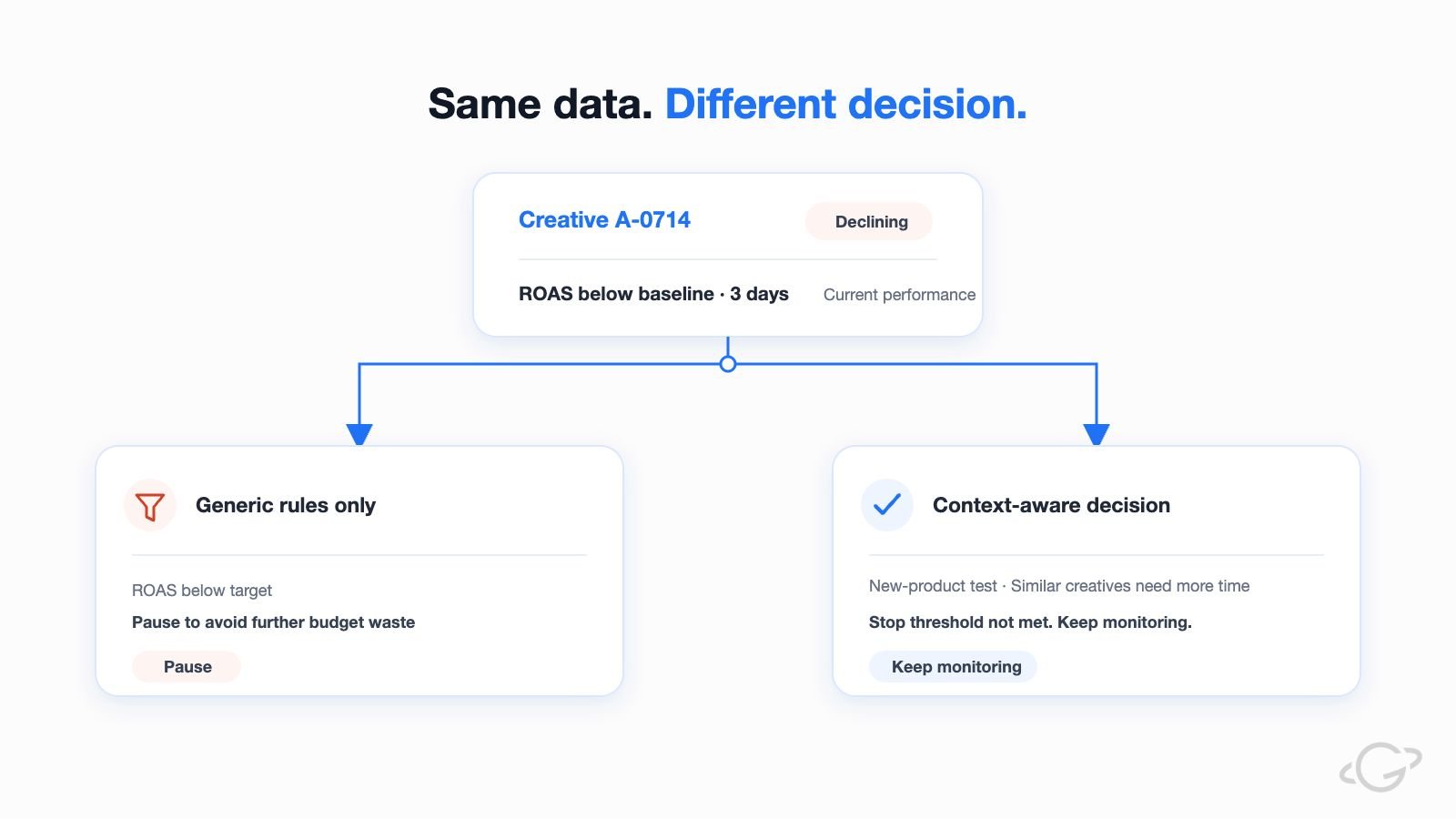
"Spend on this creative is rising. Should we pause it?"
A generic answer may sound reasonable: performance is below target, so pause the asset to avoid further waste.
But real growth work is rarely that simple.
The creative may be part of a new-product test, where the team has deliberately made room for exploration. Similar assets may need a longer ramp-up period. The current priority may be scale rather than efficiency. The asset may have a separate testing budget. And even if action is warranted, the decision may fall outside the operator's approval boundary.
The same performance signal can lead to different decisions across different businesses, goals, and stages.
That is the limitation of generic AI advice. It can be broadly reasonable without being ready to use.
Four layers of Context behind a real decision
A reliable growth decision usually depends on four layers of information.
Business foundation
What is the product? Who is the target customer? What are the brand, compliance, account, and budget constraints?
Current objective
Is the team scaling, protecting efficiency, testing a new offer, validating a creative direction, or solving a specific problem?
Historical results and learnings
How have similar creatives, campaigns, and audiences performed? What does normal volatility look like? What has already worked—and what has not?
What can move forward within the team's Guardrails? What requires approval? Which conditions should trigger escalation?
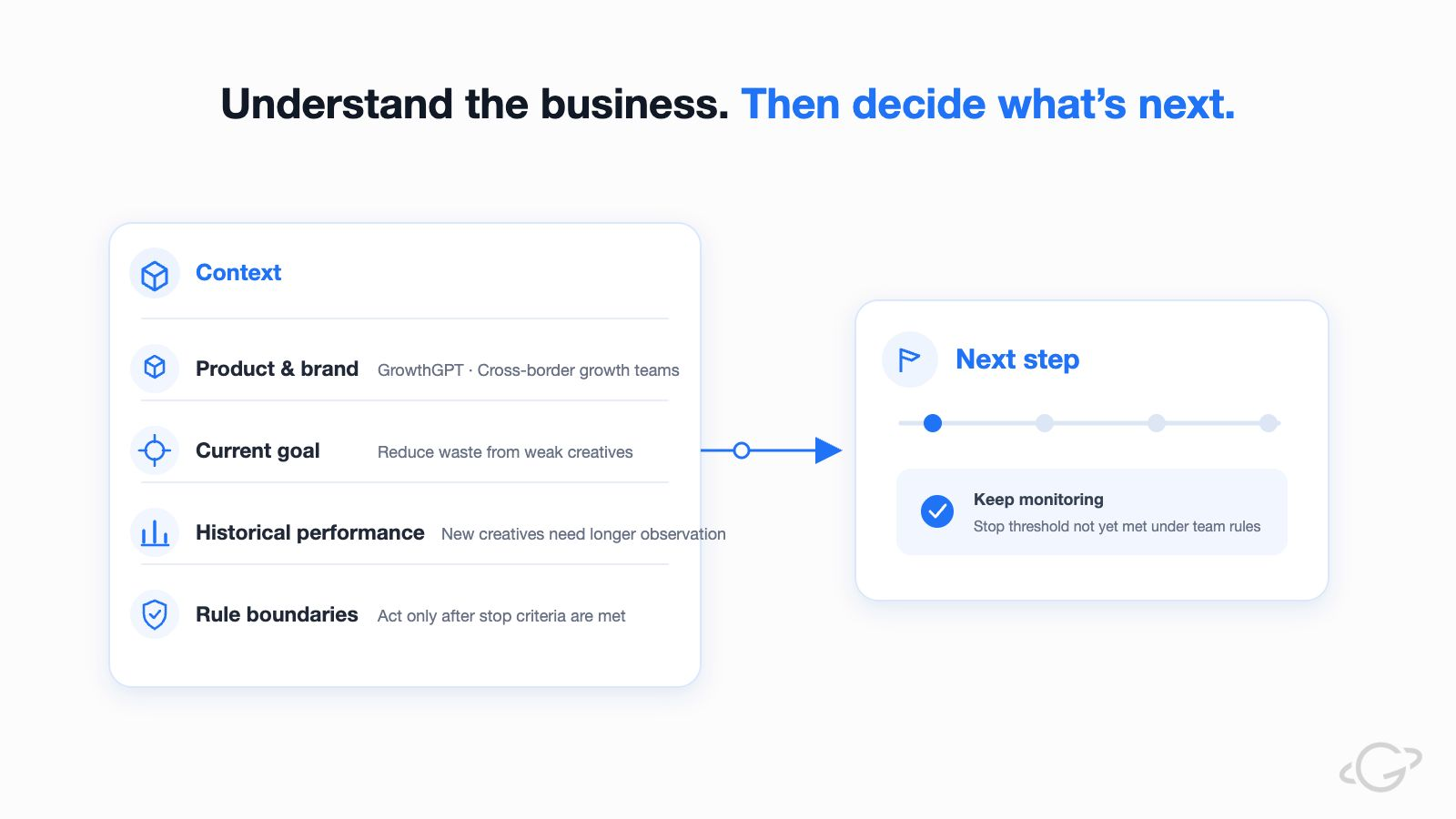
Without Context, every cycle begins with reconstruction: finding the data, recovering the background, confirming the objective, and rechecking the rules.
With Context, the team begins from a shared understanding of what matters.
Context is not only background
Context is not just the information available before a task begins.
It also includes what the team learned in previous cycles: actions taken, outcomes observed, unresolved exceptions, and approved changes to the way the work should be handled.
That is what makes a Growth Loop continuous.
If a team discovers that a new creative format needs a longer observation period, that learning can inform the next cycle. If a budget adjustment produces a meaningful result, that evidence can shape the next recommendation.
The result does not end in a report. It returns to Context.
The same question, with a better answer
Let's return to the original question: should this creative be paused?
Without Context:
ROAS is below target. Pause the creative to avoid further waste.
With Context:
This creative is part of a new-product test, where the current priority is validating creative directions. Similar assets have historically needed a longer observation period. It has not reached the team's stop criteria, so continue monitoring. If it crosses the threshold, route it into the appropriate action or approval flow.
The difference is not that one answer understands ROAS better.
The difference is that the second answer understands what the team is trying to achieve, why it is operating this way, and what it is authorized to do.
Context is the shared starting point of every cycle
For growth operators, Context removes repetitive information handoffs.
You don't have to re-explain the product background, the current objective, and past performance every time you ask a question, or dig through scattered retrospective notes. Less time spent finding and aligning information means more attention on strategy and creative work.
For team leads, Context provides a more stable decision baseline.
Everyone works from the same business context, objectives, and rules. New teammates understand the team's standards faster. Institutional knowledge no longer depends on verbal handoff alone.
More importantly, the previous cycle's results no longer end in a report. Handled items, effective methods, open questions, and new evidence all return to the next cycle's Context, shaping the decisions that follow.
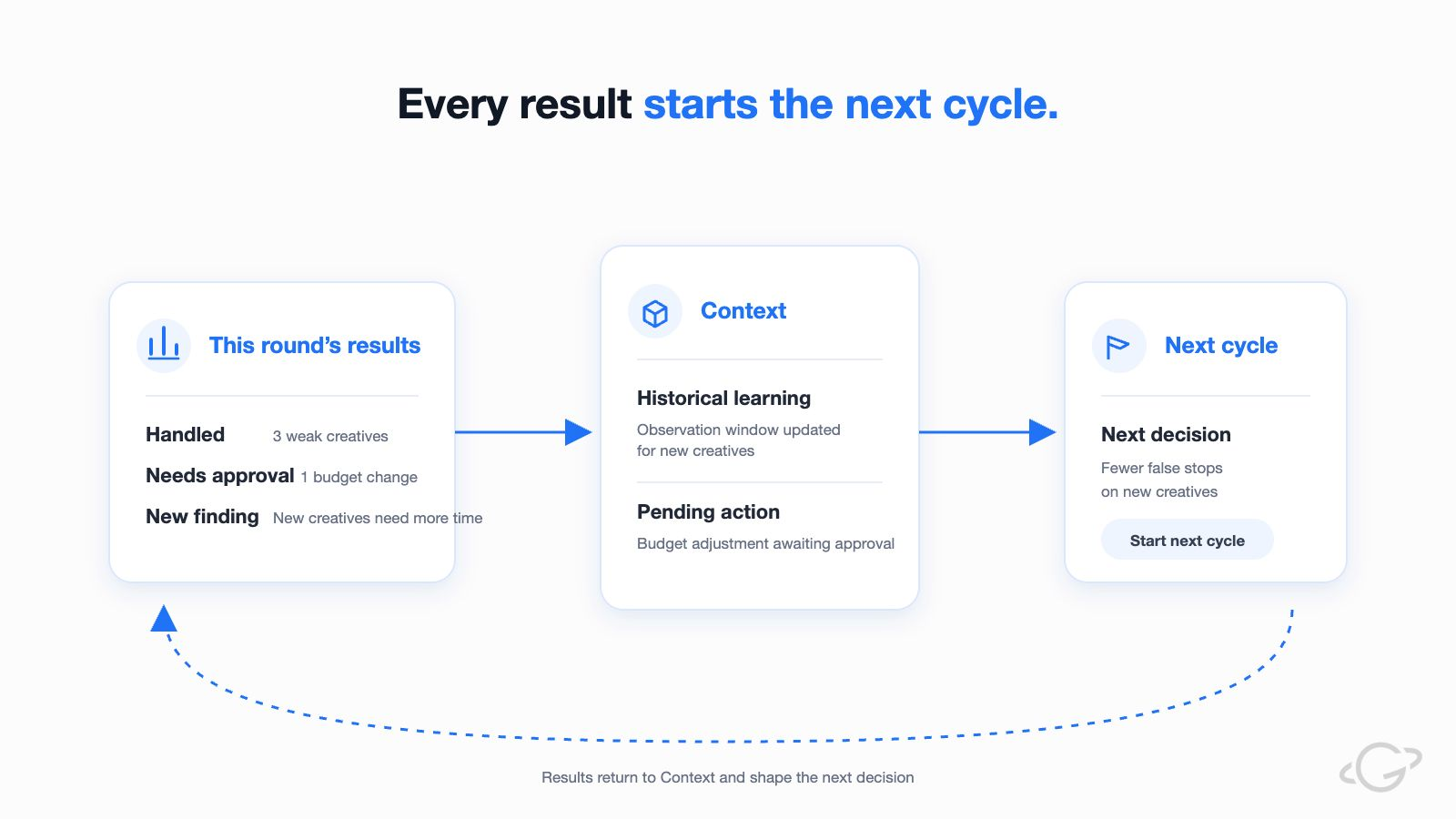
Context gives every Growth Loop a real starting point, and turns every result into a better starting point for the next one.
Next up: Skills—how a system that understands your business can then run the work the way your team has already proven it should be run.
GrowthGPT 2.0 is now available. Start by defining the business information, current objectives, historical evidence, and Guardrails that should shape your next decision.
→ Related: Loop Engineering Is a Start. Growth Systems Are the Destination.