GrowthGPT 2.0: A Continuous Growth System
GrowthGPT 2.0 connects business goals, context, team methods, execution boundaries, and results into one operating loop—so growth work keeps moving instead of restarting from zero.
Growth teams do not struggle because they lack tools.
They struggle because their work keeps resetting.
A campaign ends. A report is filed. A creative test is reviewed. An account issue is resolved. Then the next cycle begins—and someone has to reopen dashboards, dig through documents, reconstruct the business context, restate the rules, and remember what the team has already learned.
The work is not really starting over. But the process often is.
Today, we're introducing GrowthGPT 2.0.
The core shift: GrowthGPT 2.0 connects business goals, context, team methods, execution boundaries, and results into one operating loop—so growth work can keep moving instead of restarting from zero.
In 1.0, GrowthGPT helped you complete a task.
In 2.0, it helps you keep the work connected.
People still define the goal, set direction, and establish boundaries. GrowthGPT helps bring together the relevant context, apply the team's method, move work forward, and feed the results into the next decision.
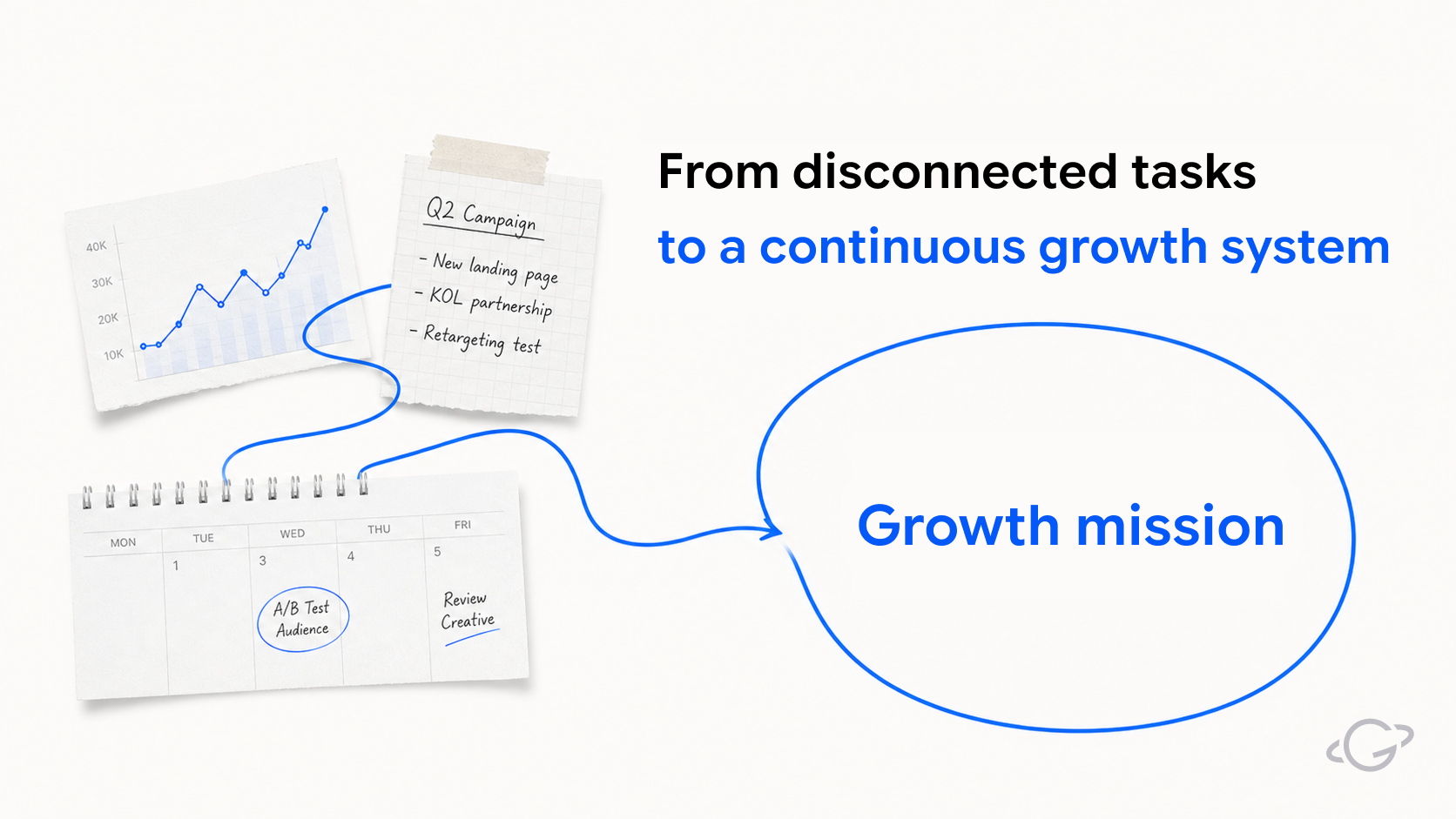
Growth work should not end in a report
Most growth tools are built to finish a task: analyze performance, develop creative assets, summarize a campaign, or research a market.
Those tasks matter. But a completed task is not the same as sustained progress.
For growth work to compound, the outcome of one cycle has to become an input to the next. What was tested, what changed, what worked, what did not, what still needs review, and what the team decided to do differently — all of it should stay connected to the work ahead.
That is the idea behind the Growth Loop:
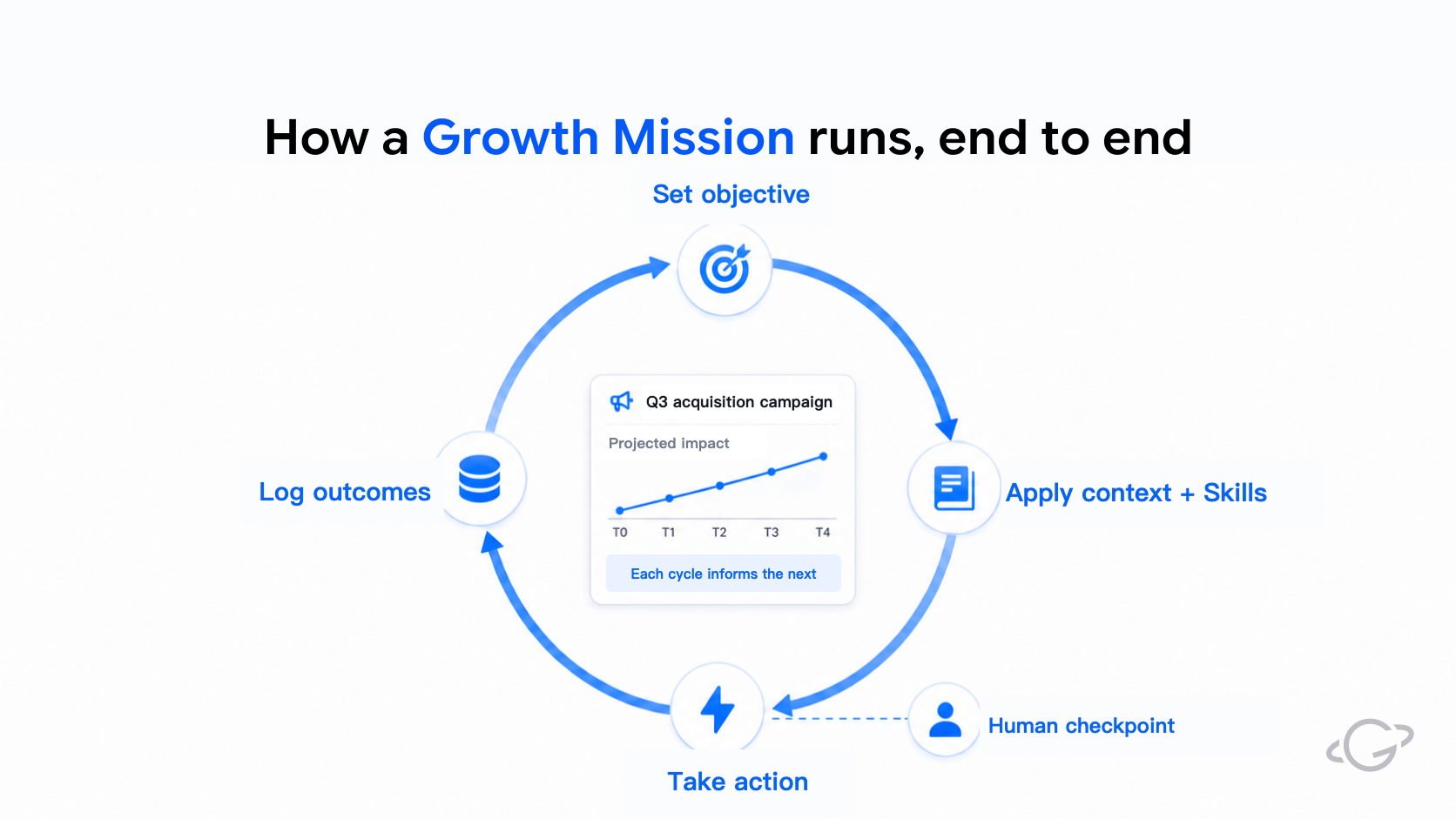
Define a goal → understand the Context → apply the team's Skills → execute within Guardrails → capture Results → use them in the next cycle
GrowthGPT 2.0 is designed to help teams run that loop continuously.
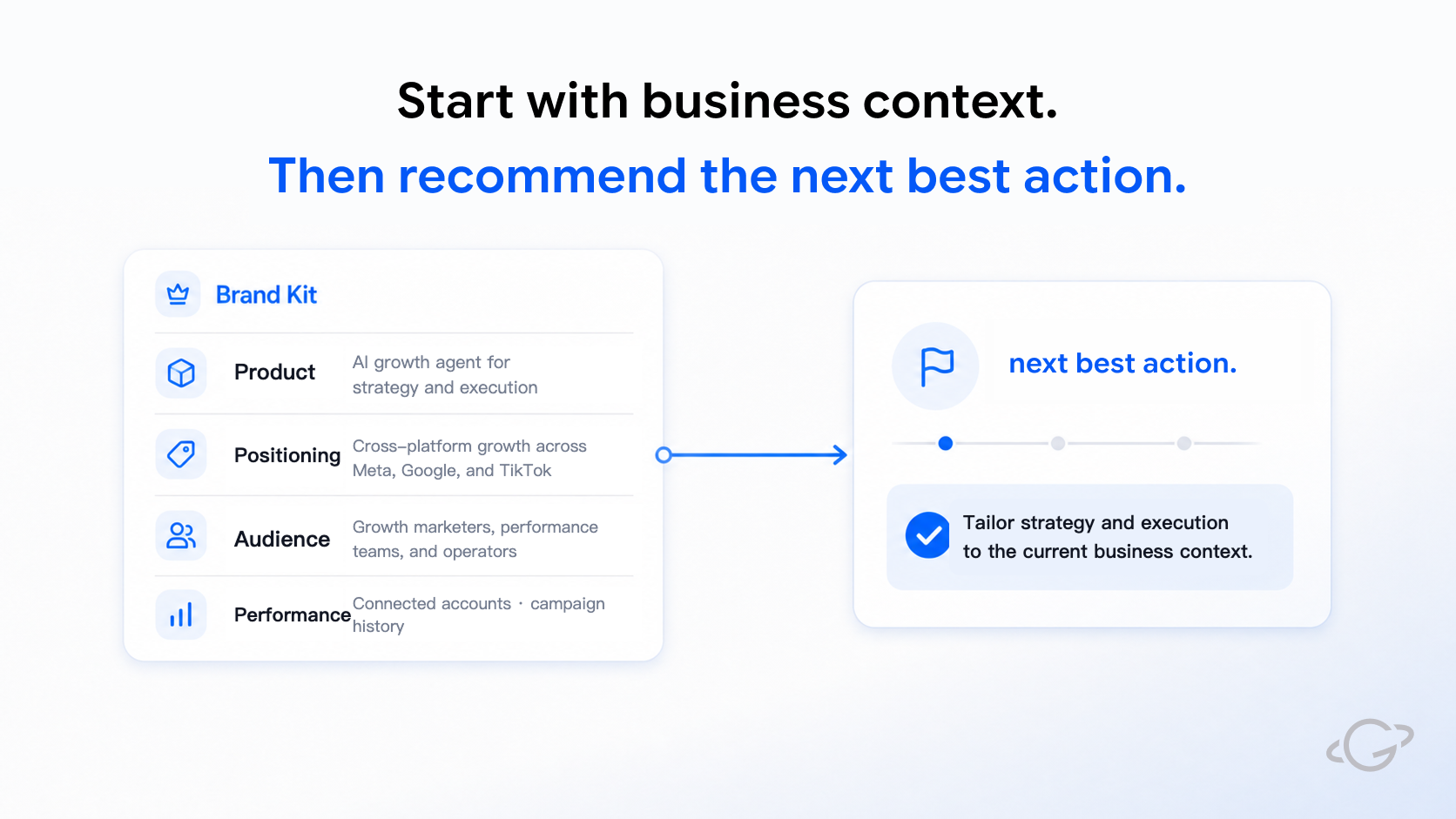
Context: understand the business before deciding the next move
"Should we stop this creative?"
"How is this campaign actually performing?"
"Where should the next round of iteration start?"
These questions look simple. They are not.
A reliable answer depends on more than one metric or one prompt. It depends on the product, brand standards, audience, budget, business objective, what has already been tried, what can be executed directly, and what must be approved by a human.
The hard part of growth work is rarely the question itself. It is the business context behind the question.
GrowthGPT 2.0 can bring together the team's available materials, operating rules, and historical data, organize the relevant context first, and then make a recommendation.
It is not here to answer, "What do teams usually do?"
It is here to help answer:
Given our product, goals, budget, and past performance, what should we do now?
That means teams can spend less time finding and reconstructing information — and more time deciding what matters next: where the problem is, what deserves priority, and what the next move should be.
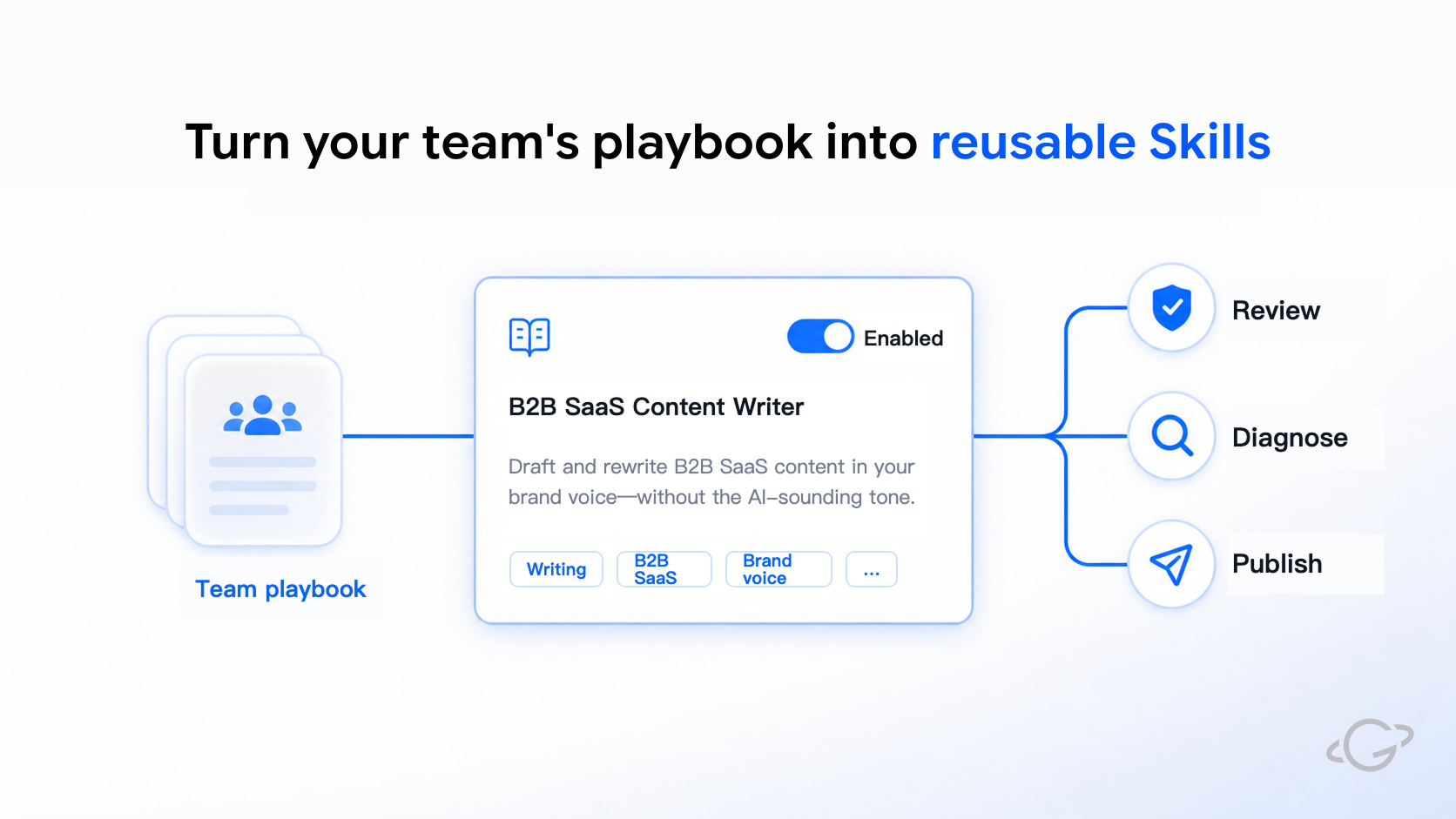
Skills: turn team methods into reusable operating capacity
Every growth team already has a way of working.
Some teams have clear brand-review standards. Some diagnose account volatility in a fixed sequence. Some already know which actions can run automatically and which require owner approval.
The problem is that those methods usually live in senior operators' heads, scattered documents, and day-to-day conversations. New teammates have to relearn them. Cross-team work means realigning to the same standards again and again.
Custom Skills in GrowthGPT 2.0 help teams capture methods that already work—and apply them to tasks such as brand review, ad diagnosis, creative retrospectives, and multi-platform publishing.
What information is required, what steps to follow, what standards to use, how the output should be delivered, and where human confirmation is mandatory — all of it can be defined in advance.
A Skill is not a longer prompt. It is a proven team method, packaged so it can be reused, improved, and applied consistently.
Once the method is captured, the team spends less time re-explaining the same process, and new teammates can reach the same standard more quickly.
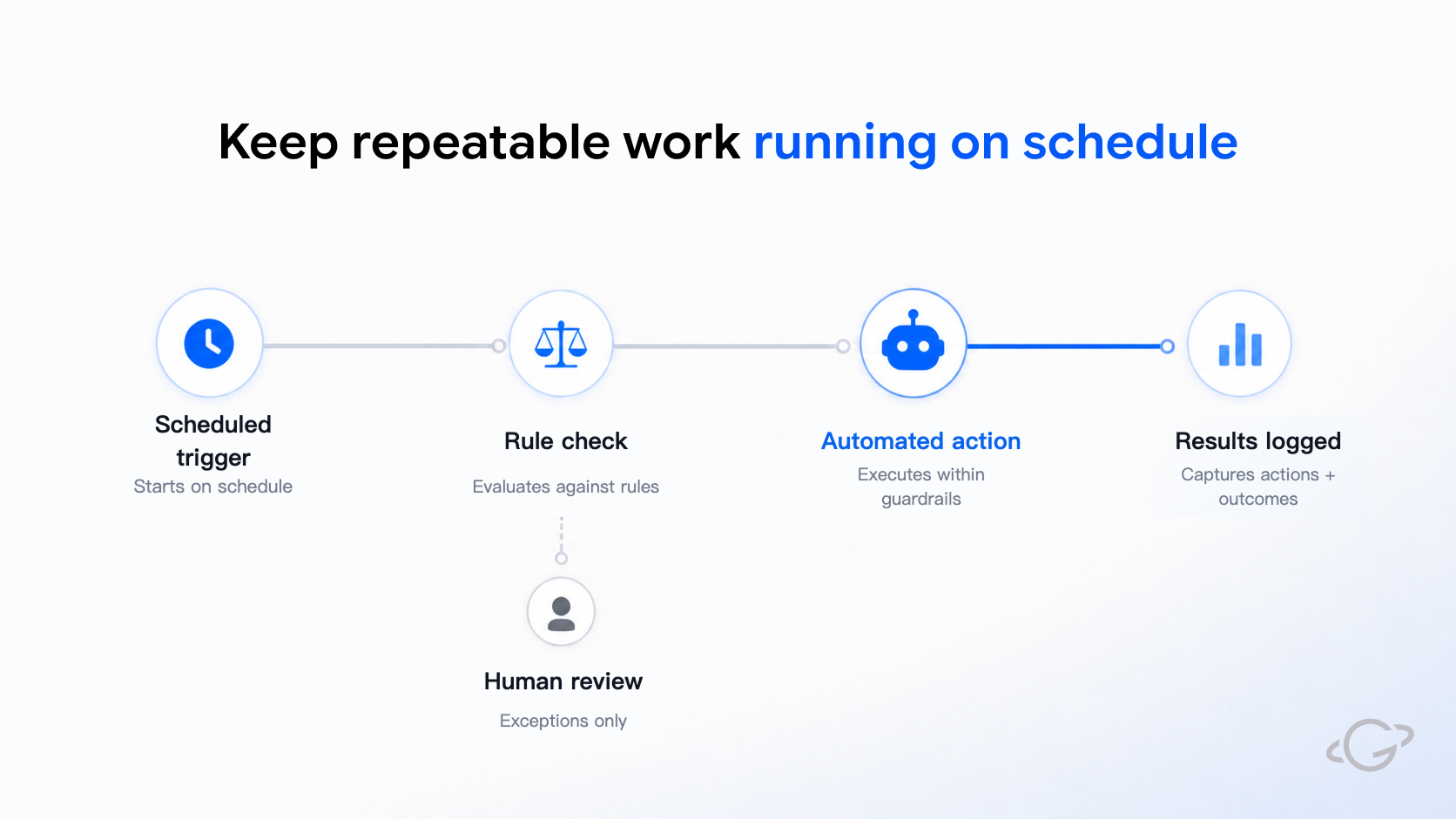
Guardrails: let defined work keep moving
A lot of growth work does not require a fresh decision every time.
How often to inspect creative performance. When to stop or reduce distribution. When to adjust budget. When to log an issue instead of taking action.
Teams often already know the rules. What they lack is a system that can keep those rules running.
GrowthGPT 2.0 lets teams define inspection frequency, decision logic, handling methods, and boundaries for human intervention. Once configured, the system can run on schedule:
- Routine actions within the approved range can proceed automatically.
- Material decisions, such as budget changes or publishing, and anything outside the rules are routed to a human for confirmation.
This is not about handing judgment to AI. It is about stopping clearly defined, repetitive coordination work from consuming the team's attention.
After each cycle, the system returns an organized record of what happened, what was already handled, and what is still waiting for a decision.
Results are no longer just the end of a task. They become context for the next one—so the team can make decisions based on prior actions and real outcomes, rather than starting from a blank page.
One Growth Loop, end to end
Consider a common growth mission: reducing wasted spend on underperforming creative assets.
- Define the mission. The team sets the goal, inspection frequency, decision standards, and execution boundaries.
- Bring in Context and apply the Skill. GrowthGPT reads the relevant account-performance data, creative assets, brand requirements, and historical records, then evaluates the creative assets using the team's configured Skill.
- Execute within Guardrails. Actions that qualify and fall within the approved range can be executed automatically. Any material budget changes or out-of-rule cases are sent to the owner for confirmation.
- Return Results to the next cycle. When the run finishes, GrowthGPT organizes the issues found, actions taken, decision rationale, and items still awaiting review.
When the next creative test begins, previous actions, effective methods, and open issues are already available as inputs. Work that used to be scattered across dashboards, documents, chats, and people's memories becomes one continuous process.
From growth copilot to a continuous growth system
GrowthGPT 1.0 made individual tasks faster: account analysis, creative development, reporting, and market research.
GrowthGPT 2.0 addresses a deeper problem: the broken chain between those tasks. Teams define the goal, method, standards, and boundaries once. The system keeps those pieces connected—continuously monitoring, acting within the rules, escalating exceptions, and turning every result into the starting point for the next cycle.
This is not about stacking more AI features into the product. It is about a more basic operating question:
When tools multiply and tasks fragment, how do you keep growth work moving toward the same goal—instead of constantly switching systems, restating context, and realigning the process?
Core judgment should stay human: what goal to set, which direction to take, and how creative work should resonate. AI should not replace that.
But the repetitive, mechanical, time-consuming work of holding the process together should not depend on people doing it manually every day.
In the past, people had to keep connecting tools, information, and tasks by hand.
Now, people define the goal, direction, and boundaries. GrowthGPT helps clearly defined work keep moving.
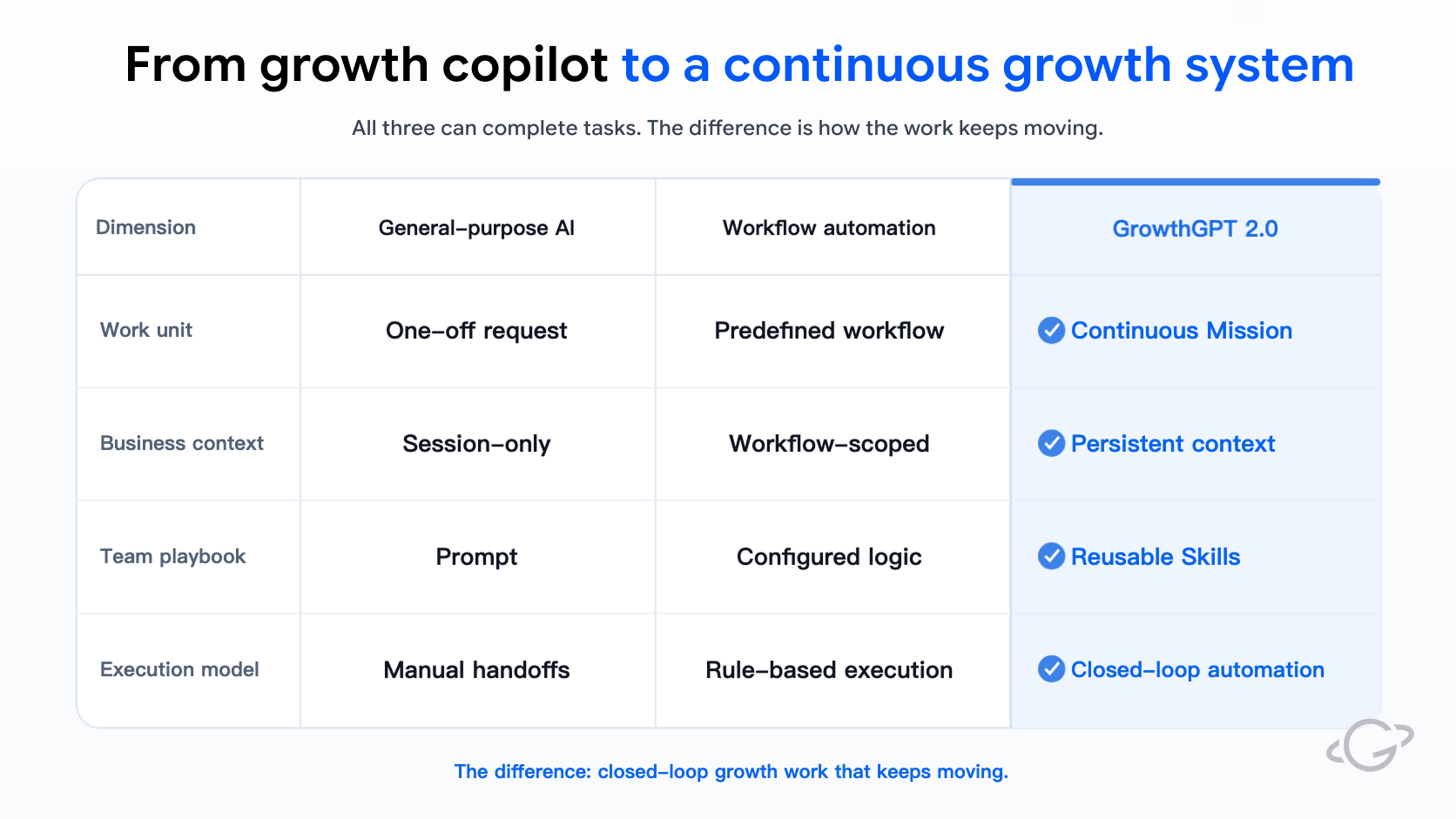
GrowthGPT 2.0 turns growth from a pile of disconnected tasks into a continuous system organized around a shared goal.
GrowthGPT 2.0 is now available.
Start your first Growth Mission—and make the next cycle begin further ahead than the last one.
→ Related: Loop Engineering Is a Start. Growth Systems Are the Destination.
→ Related: A smarter model still can't run your ads