Most Stores Don't Fail at Product Research. They Fail Between Analysis and Execution.
Why your Shopify store isn't converting often has less to do with product research and more to do with the gap between analysis and execution. Here's where sellers get stuck — and how to close the loop.
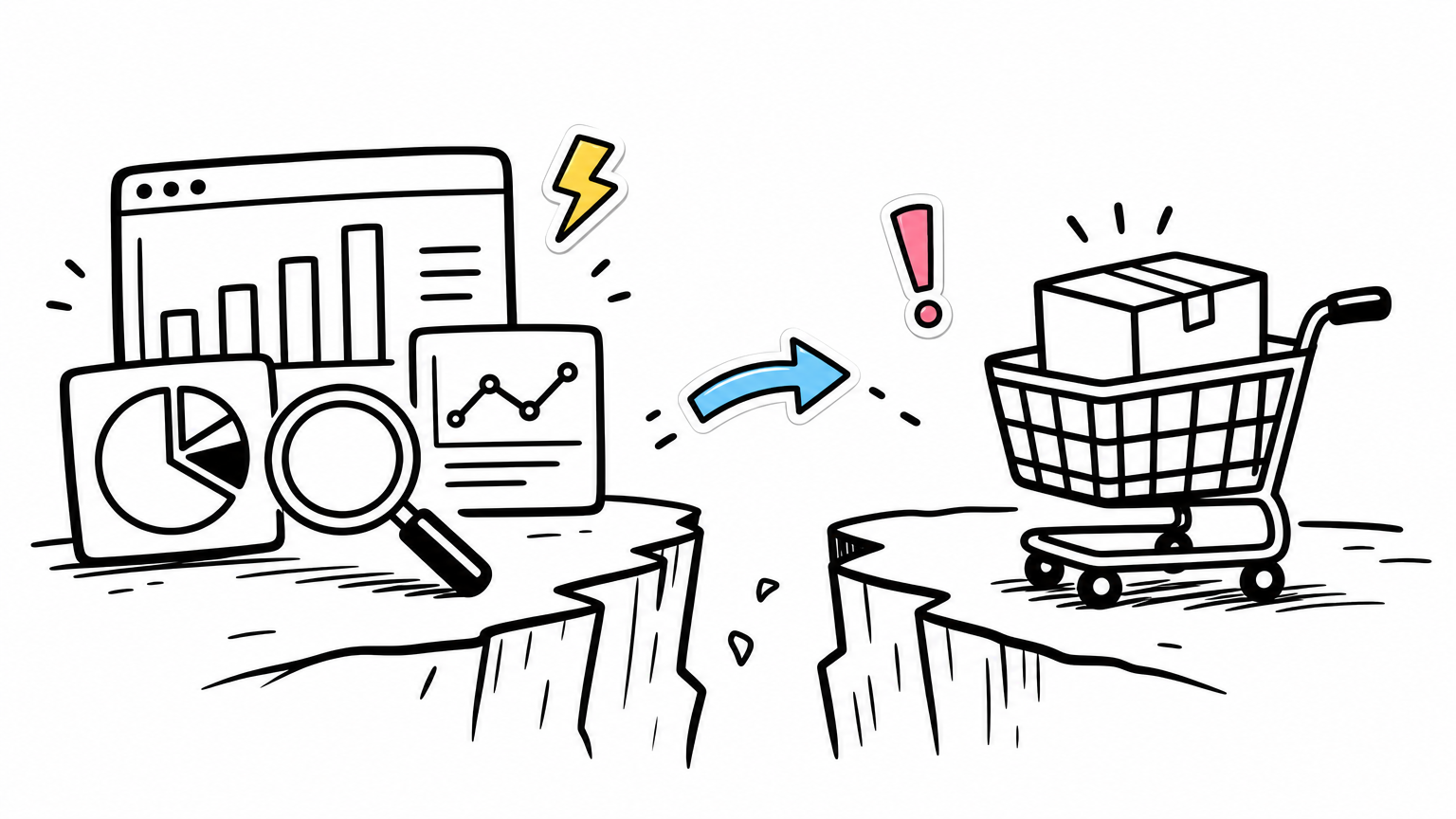
Most sellers don't lose because they picked the wrong product.
And most don't lose because they ran the wrong ads.
They lose in the space between knowing what to do and actually doing it.
They've done the research. Studied competitors. Found a promising niche. Built a spreadsheet. Bookmarked a dozen tools.
Then nothing happens.
Not because they're lazy. Because the distance from insight to action is longer than it looks — and almost no one talks about it.
The Two Halves
Every seller's path from zero to consistent sales breaks into two halves:
- Analysis: What to sell. Whether it's profitable. Whether your pages are ready. What competitors are running.
- Execution: Producing creatives. Launching ads. Iterating based on results. Retaining customers.
Most sellers stall not because they fail at one half, but because the handoff between the two halves breaks down.
Below are the stages where that breakdown happens most often.
The Analysis Half
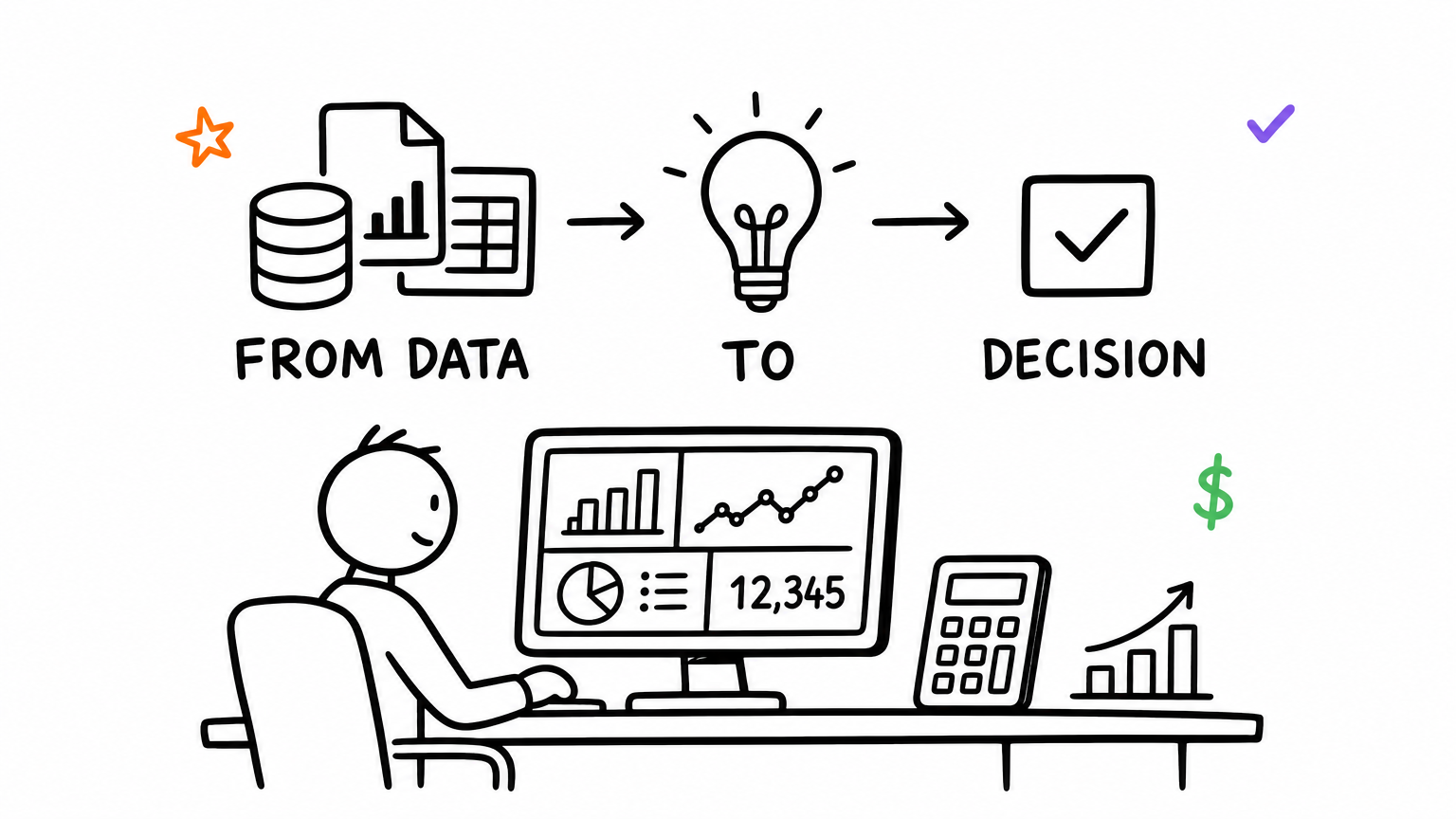
Product Research
The question isn't "which category is big."
A big market where the top slots are locked isn't an opportunity — it's a trap.
The real question: is there demand that supply hasn't saturated yet?
Before committing, validate three things:
- Proven purchase demand (not just browsing interest)
- Whether incumbents have locked distribution
- Whether new supply is flooding in (rising seller count = red flag)
For Shopify / DTC: Google Trends trajectory, Amazon BSR shifts, Meta ad density in the niche.
For TikTok Shop: Trends move faster and competitive windows are shorter. Watch affiliate creator density — if 50+ creators are already pushing a product, the window is likely closing.
The challenge isn't finding products. It's finding products where the window is still open.
Best Sellers shows what's actually moving. Category Opportunity Radar surfaces categories with demand but low affiliate saturation — upper-right quadrant = today's windows.
Unit Economics
Many sellers list products without ever calculating per-unit net profit.
COGS. Inbound shipping. Last-mile. Packaging. Platform commission. Affiliate commission (15–30% on TikTok Shop). Return rate. Ad spend allocation.
If margin is too thin, scaling accelerates the loss. This isn't a nice-to-have step — it's the foundation everything else sits on.
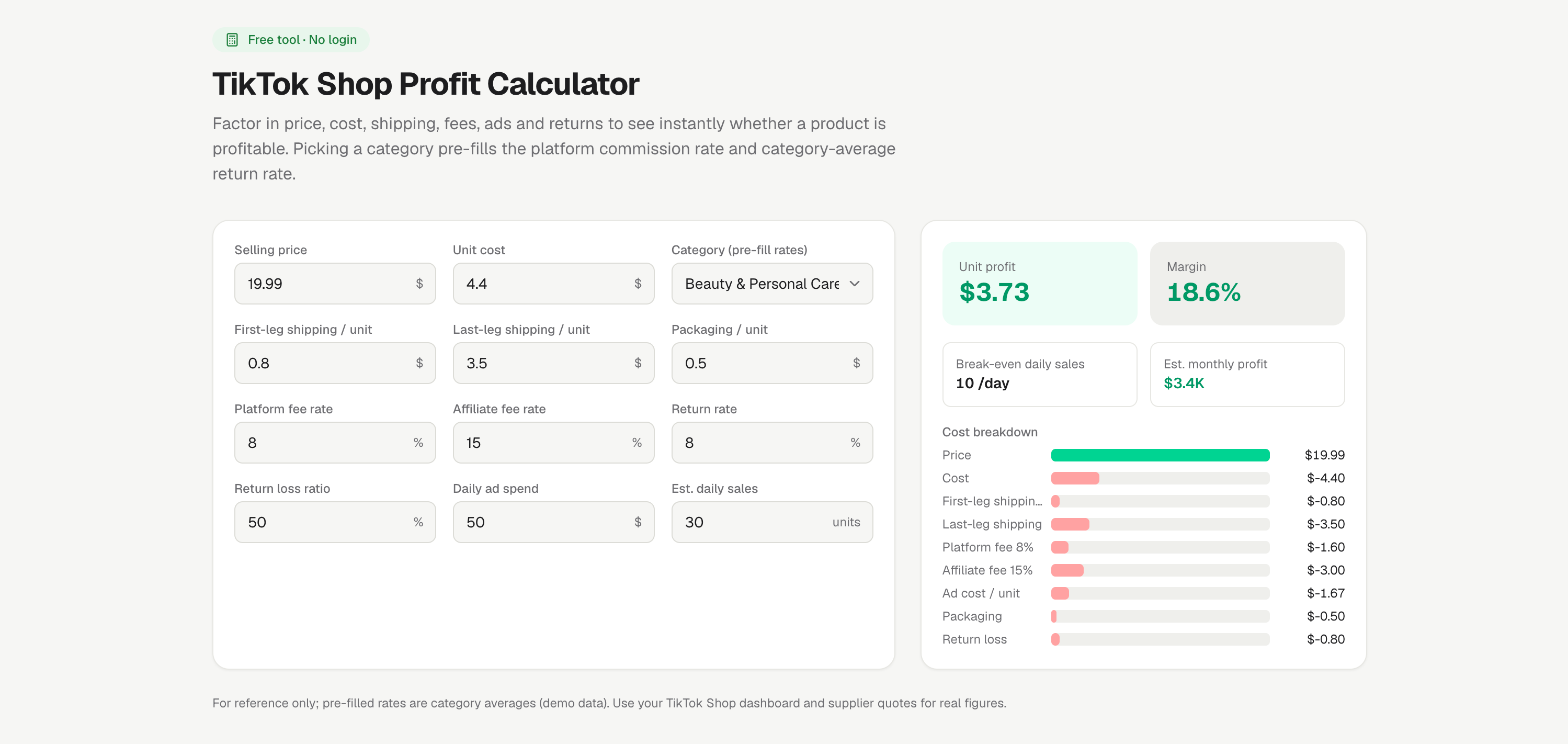
Free Profit Calculator — runs the full stack in one pass, including break-even daily volume. (On-page numbers are demo data.)
Product Pages
Your product images might look fine to you. Placed in a grid next to competitors, they might get scrolled past in a second.
Three checks:
- Does the hero image hold attention at thumbnail size?
- Do detail shots communicate material, dimension, and use case?
- Are trust signals complete? (Shipping / Returns / Reviews / About)
Many sellers skip this and start paid traffic before meeting baseline quality. That's budget poured into a leaking bucket.
You don't need perfection. You need top-20% of your category's standard. Otherwise traffic arrives and bounces.
ShopShot (free Shopify app) — scores each image by role, benchmarks against category leaders, tells you exactly what to fix.
Competitor Intelligence
Before spending on ads, look at what's already working in your niche. Which angles, hooks, and formats keep appearing in active campaigns.
If something keeps running, it's usually converting.
Meta / DTC: Facebook Ads Library — search by brand or keyword, filter to active, study what's been live 30+ days.
TikTok: Which content structures are top affiliates using? Which Spark Ads are being reboosted? Repeated boosting signals ROI above threshold.
The problem with doing this manually: it's slow, unsystematic, and hard to see category-level patterns. Some teams automate this by pulling competitor ads, TikTok Shop transaction data, and public growth signals into a single report — reducing the time between observation and action.
At this point, the analysis half is done.
You know what to sell, whether it's profitable, whether your pages are ready, and what angles competitors are using.
Now the real question: what happens next?
The Execution Gap
This is the part no one writes about.
Most ecommerce teams don't fail because they lack information.
They fail because information doesn't survive the handoff.
Research becomes a brief.
The brief becomes a design task.
The design becomes an ad.
The ad becomes a report.
The report becomes another brief.
Somewhere along the way, context disappears.
You spend hours studying competitor creatives. You identify three promising angles. Then what?
- Brief a designer — re-explain the selling points from scratch.
- Send references — again.
- Describe the target audience — again.
- Wait two weeks. What comes back doesn't match the original insight.
Every handoff degrades the signal. Every translation loses information.
By the time creatives are finally ready and ads go live, the window you identified may already be closing.
This is where most sellers actually lose.
Not at the research stage. Not at the ad platform. At the seams between stages — where insight gets diluted into action.
The execution gap isn't a single mistake. It's a structural problem. And it doesn't get solved by adding another tool to the stack. It gets solved by eliminating the translations between steps.
The Execution Half
Creative Production

Most creative bottlenecks aren't creative problems.
They're translation problems.
The market insight gets translated into a brief. The brief gets translated into a design. The design gets translated into an ad. Every translation loses fidelity.
Meanwhile, the operational constraints compound:
- Outsourcing is slow and expensive — three rounds and still not right
- One set of creatives fatigues quickly; you need constant refresh
- Running proper A/B tests requires volume your production pipeline can't sustain
The principle: creative production should plug directly into analysis output. The selling points, competitor angles, and audience insights you identified shouldn't need manual re-translation before becoming ads.
AI Creative was built around eliminating those translations. (How it works →)
Ad Optimization
Many sellers think optimization means reading dashboards.
Optimization is decision-making.
Which creative gets paused? Which gets more budget? Which geo keeps testing? Which audience gets cut? When do you start the next round?
ROI lives inside these decisions. Not inside some "optimal settings" configuration.
A concrete scenario: you're testing 3 creatives × 2 countries. Day two — Creative A in the US is at $18 CPA (break-even is $22). Creative B is at $35. Creative C has insufficient data.
The right moves:
- Scale A + US by 30%
- Kill B
- Give C one more day with a hard stop-loss
- Queue the next batch
Simple in theory. In practice, you're running Meta and TikTok simultaneously — dozens of creatives, a dozen geos, hundreds of micro-decisions daily. These decisions can't wait; every day delayed is another day of wasted spend.
High-performing teams don't optimize because they're smarter. They optimize faster. The faster feedback loop wins.
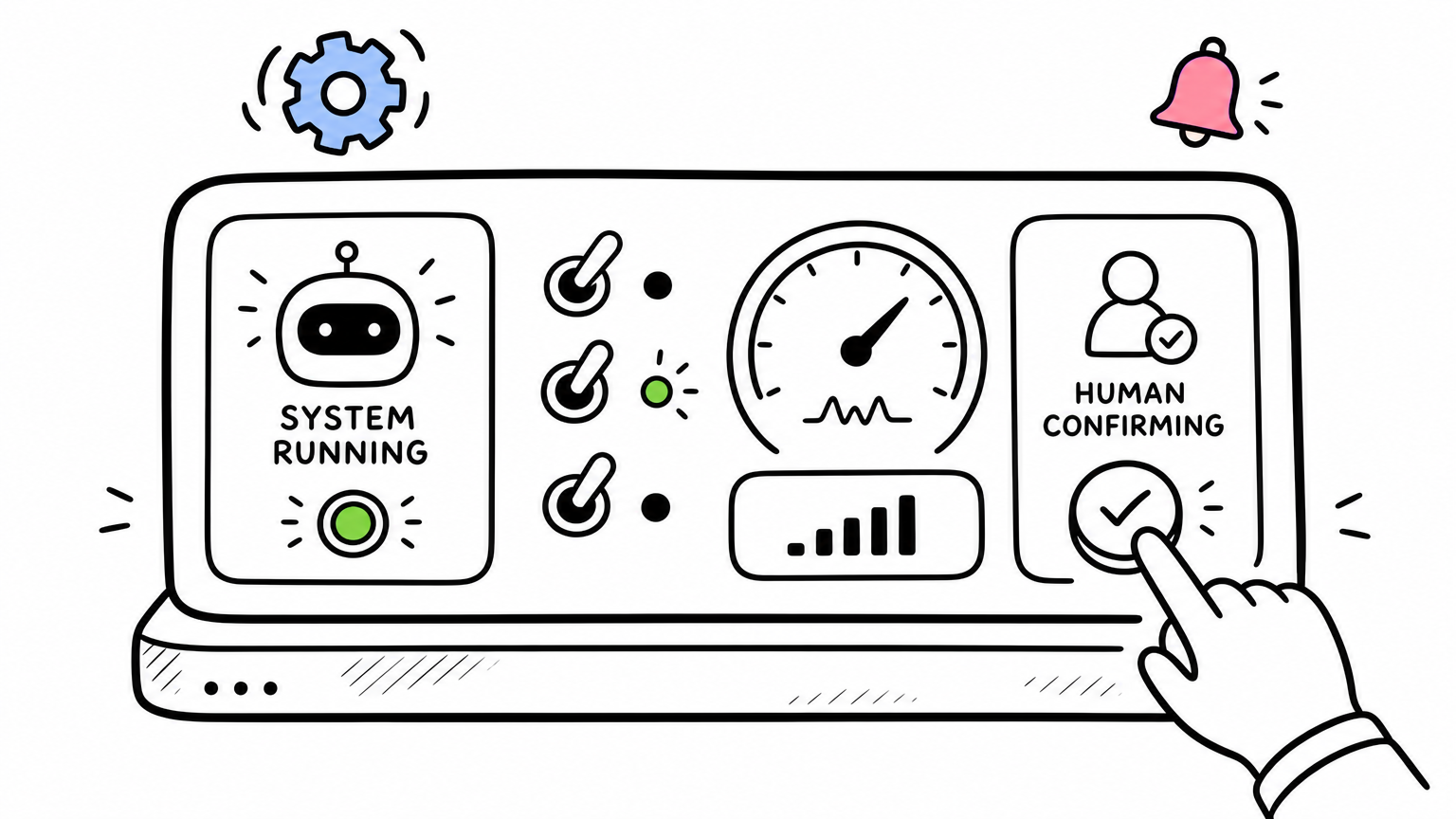
That's the problem Autopilot is designed to solve — daily account inspection, organized decisions, human-confirmed execution. (How it works →)
Retention
Most sellers over-index on acquisition and under-invest in retention.
First-visit conversion is typically 1–3%. That means 97% of traffic needs a second or third touch.
At minimum, deploy these 6 automated emails:
| Trigger | Timing | Core message |
|---|---|---|
| New subscriber | Immediate | Welcome + first-purchase offer |
| Cart abandonment | 1 hour | Reminder + urgency |
| Cart abandonment | 24 hours | Social proof |
| Browse without purchase | Next day | Related products + value reinforcement |
| Post-purchase | After shipment | Thank you + review request |
| Replenishment | 14 days | Complementary products / refill |
For TikTok Shop: guide buyers to follow your account. Content retargeting costs nothing.
The Shift
For years, ecommerce software was built to help people understand what was happening.
Dashboards. Analytics. Reports. Insights.
The next generation is being built to help people do something about it.
Not more information. Shorter distance between information and action.
Not more tools in the stack. Fewer translations between steps.
That's the shift from analysis software to execution systems.
Most sellers don't need more dashboards.
They need the gap between insight and action to disappear.
Research that flows directly into creative production. Performance data that flows directly into the next decision. Analysis output feeding execution input. Execution results feeding the next cycle of analysis.
When there's no gap, growth compounds.
That's what GrowthGPT is built to do.
Start Here
Pick the stage where you're stuck today:
→ Haven't validated a product? Category Opportunity Radar
→ Want to see a competitor's playbook? One-sentence competitor analysis
→ Product and angles ready? Generate test creatives
→ Ads already live? Daily optimization with Autopilot