TikTok Put a Human Back on Camera. It Just Made the Case for AI in Advertising.
TikTok Shop banned AI voices and now requires a live human in shopping livestreams. Read as 'AI creative is dying,' it's a warning. Read correctly, it's the clearest map yet of where AI belongs — and a small lesson in economics.
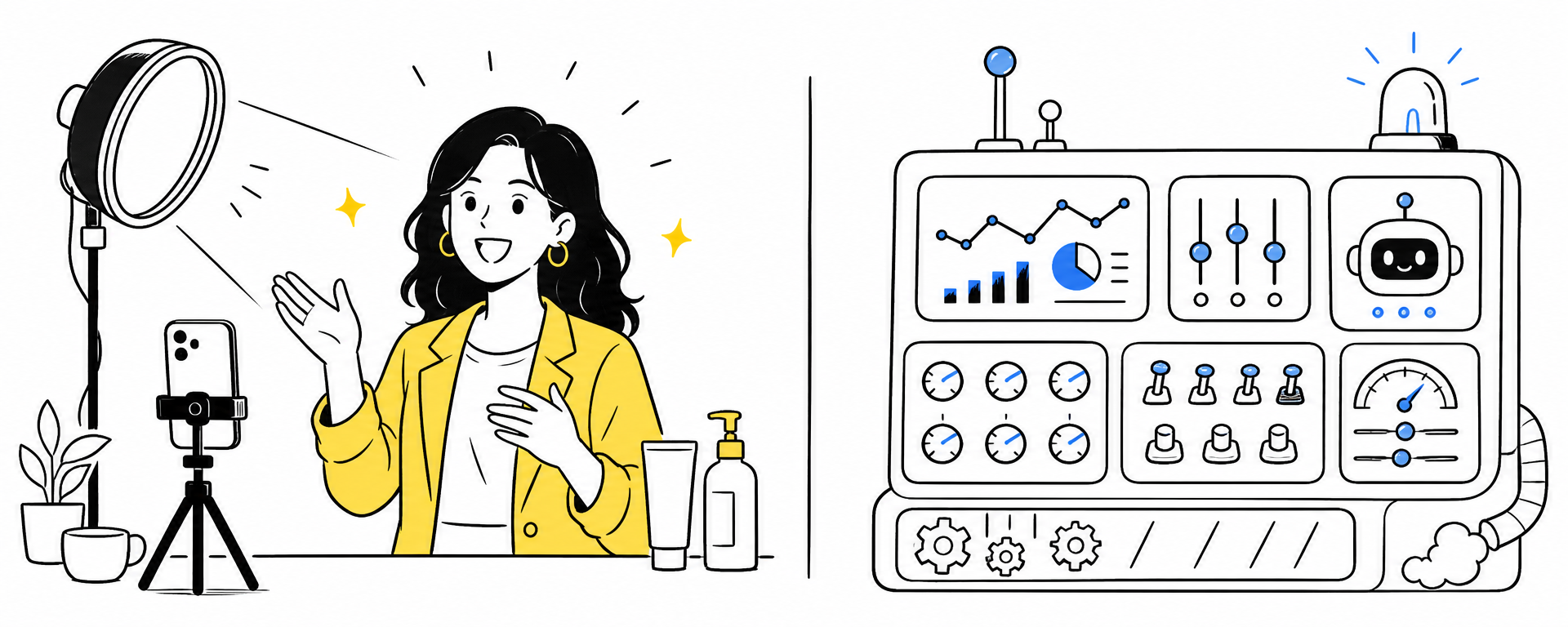
TikTok Shop just banned AI-generated voices and pre-recorded audio from promotional livestreams and started requiring a real human on camera.1 The obvious read: AI creative is dying.
The counter-intuitive one: TikTok just made one of the strongest arguments for AI in advertising — by showing precisely where it doesn't belong, and, by implication, where it does.
TL;DR: The ban isn't a verdict on AI. It's a verdict on AI pretending to be a person. Shoppers reward a human at the front of the sale and punish a synthetic one — so the market is pushing AI off the stage and into the back office, where the work never ends and the product is consistency, not authenticity. The pattern underneath is economics, not policy.
What changed
Since May 23, TikTok Shop's quality rules require a live human in promotional livestreams.1 Here's the split:
Required:
- Real-time verbal or sign-language interaction
- Face-to-camera presence
- Multi-angle product demos
Banned:
- AI-generated voices
- Pre-recorded narration
- Slideshows, looping footage, and still frames covering more than half the screen
Enforcement is tied to your account health score. The trigger wasn't ideology — it was trust: synthetic hosts spread, shoppers grew wary, and a marketplace built on trust protected the experience.
The wrong lesson and the right one
Wrong lesson: "Use less AI." That misreads the rule and leaves speed on the table.
Right lesson: The front of advertising and the back are different jobs. The front is the live host, the face, the real-time trust. The back is producing and testing creative, launching campaigns, moving budgets, pausing underperformers, coordinating across platforms. TikTok didn't evict AI from advertising — it told AI to stop standing in for the salesperson and get back to running the store. Keep the human on camera; put the AI on the controls.
The economics under the rule
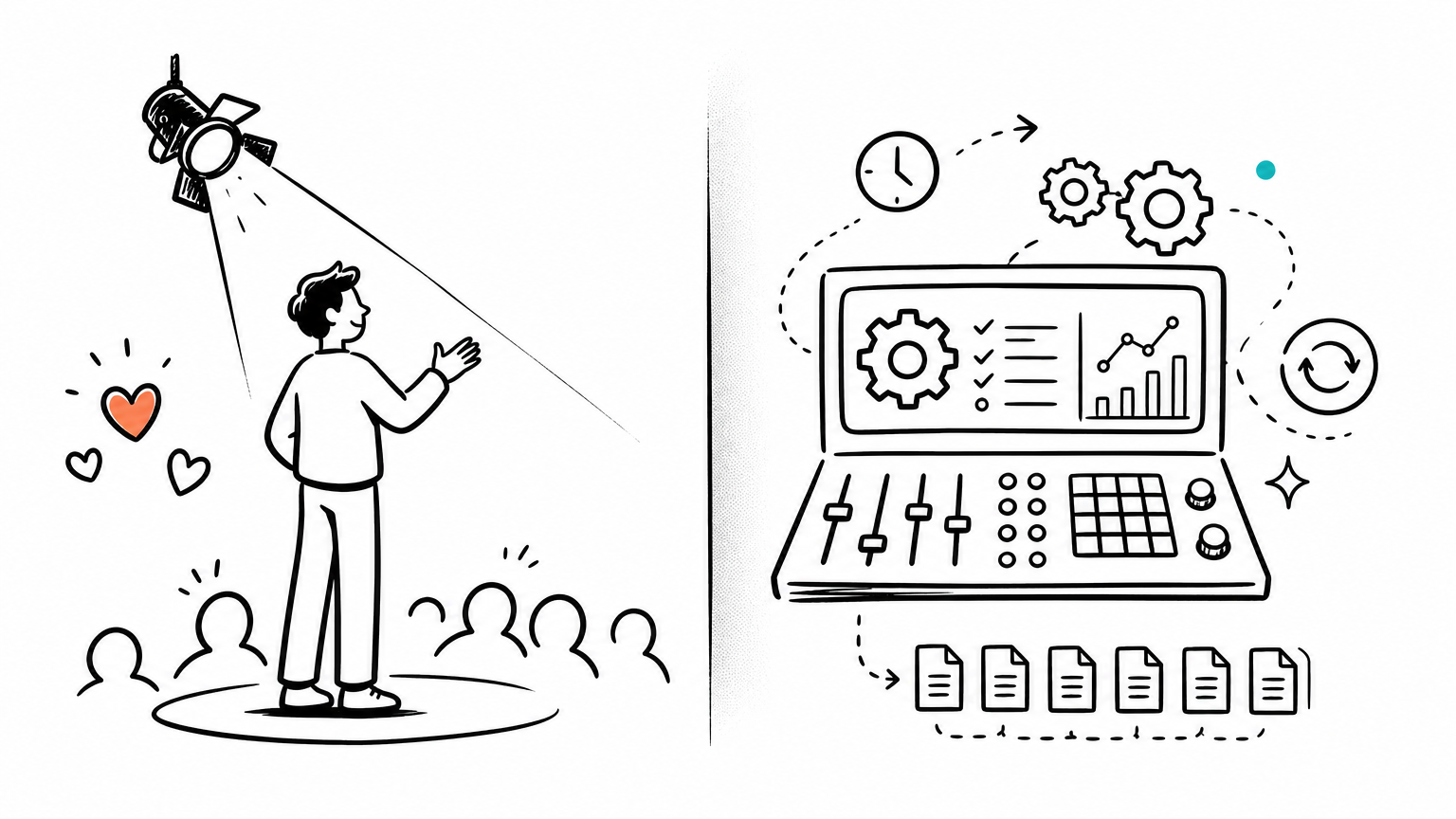
Here's the layer beneath the policy — and it's the part worth keeping. Markets consistently reject AI wherever authenticity is the product, and embrace it wherever consistency is the product. A live host sells because you believe a real person is there; authenticity is the value, so AI is unwelcome. Campaign operations reward the opposite: doing the same disciplined thing correctly a thousand times, at 2 a.m., without drift. Consistency is the value, so AI wins.
That's why AI is disappearing from livestream hosting and quietly taking over campaign operations in the same quarter. It isn't a contradiction. It's a market rewarding humans for authenticity and AI for consistency — and drawing the line exactly where those two values meet.
The bottom line
The strongest signal in this rule isn't "AI is over." It's that the market has started telling you, precisely, where AI wins and where it never will. A platform that bans the AI host is the same platform whose entire ad system is being handed to agents. Both are true, because they're on opposite sides of the same line.
Which side we're on
We never tried to replace the marketer on camera. We built the operational layer instead — the part that runs the ad ops so the human stays where authenticity and judgment live. TikTok's rule doesn't threaten that; it draws the map we already built to.
(Related: why a smarter model still can't run your ads — the permission gap is this same line, drawn one level down.)
Keep the human on camera. Put the AI on the controls.
→ See what happens after the creative ships.
FAQ
Did TikTok ban AI-generated ad creative? No. The rule targets AI voices and pre-recorded audio standing in for a live host in promotional livestreams. It doesn't ban AI-assisted creative for your feed ads.
Can I still use AI to make and run my ads? Yes — that's the side of the line where AI wins. Producing and testing creative, launching and optimizing campaigns — all consistency work. Live selling is authenticity work, and now requires a real human.
Why did TikTok require a live human on camera? Trust. Shoppers grew wary of synthetic hosts, and a shopping marketplace depends on believing what it sees. Enforcement is tied to account health, so it isn't optional.
What does this mean for AI in advertising more broadly? It marks the line: humans win where authenticity is the product; AI wins where consistency is. The strongest setups use both, on the correct side.
Footnotes
-
PYMNTS — "TikTok Shop Bans AI Voices From Livestreams" (rules published May 23, 2026): https://www.pymnts.com/news/ecommerce/2026/tiktok-shop-bans-ai-voices-from-livestreams/ ↩ ↩2