Three Questions Every Buyer Asks About AI Growth Agents
Three concerns buyers always raise about GrowthGPT — performance vs. in-house, data trust, build vs. buy. Underneath, they all point to one question.
Every serious conversation about GrowthGPT hits the same three questions sooner or later:
- "Why would this be better than my in-house team?"
- "Can I actually trust the data?"
- "Everyone's building agents now — why wouldn't I just build my own?"
They sound like three separate concerns. They're not. They all point to one underlying anxiety:
"If I bring this in, am I gaining leverage — or adding risk?"
1. "Why would this be better than my in-house team?"
Let's reframe this first — it's not an either/or.
Think about how your media buyer's day actually breaks down: roughly 30% high-value judgment (strategy, creative direction, interpreting results) and 70% operational overhead (checking dashboards, cross-referencing metrics, manually pausing underperformers, adjusting budgets, switching platforms, pulling reports for other people).
That 70% isn't where their talent lives. But it's where their time goes.
An AI agent operates on that operational layer:
It scans every campaign, every ad set, every creative — continuously, not twice a day when someone opens the dashboard. When something goes wrong, it doesn't hand you raw data and leave you to figure it out. It brings the signal to you with context and a recommended action. You decide "scale budget on winning creatives" — it executes across 50 ad sets simultaneously, not one click at a time.
So the comparison isn't "AI vs. your media buyer." It's "your media buyer + an AI agent" vs. "your media buyer + 14 browser tabs."
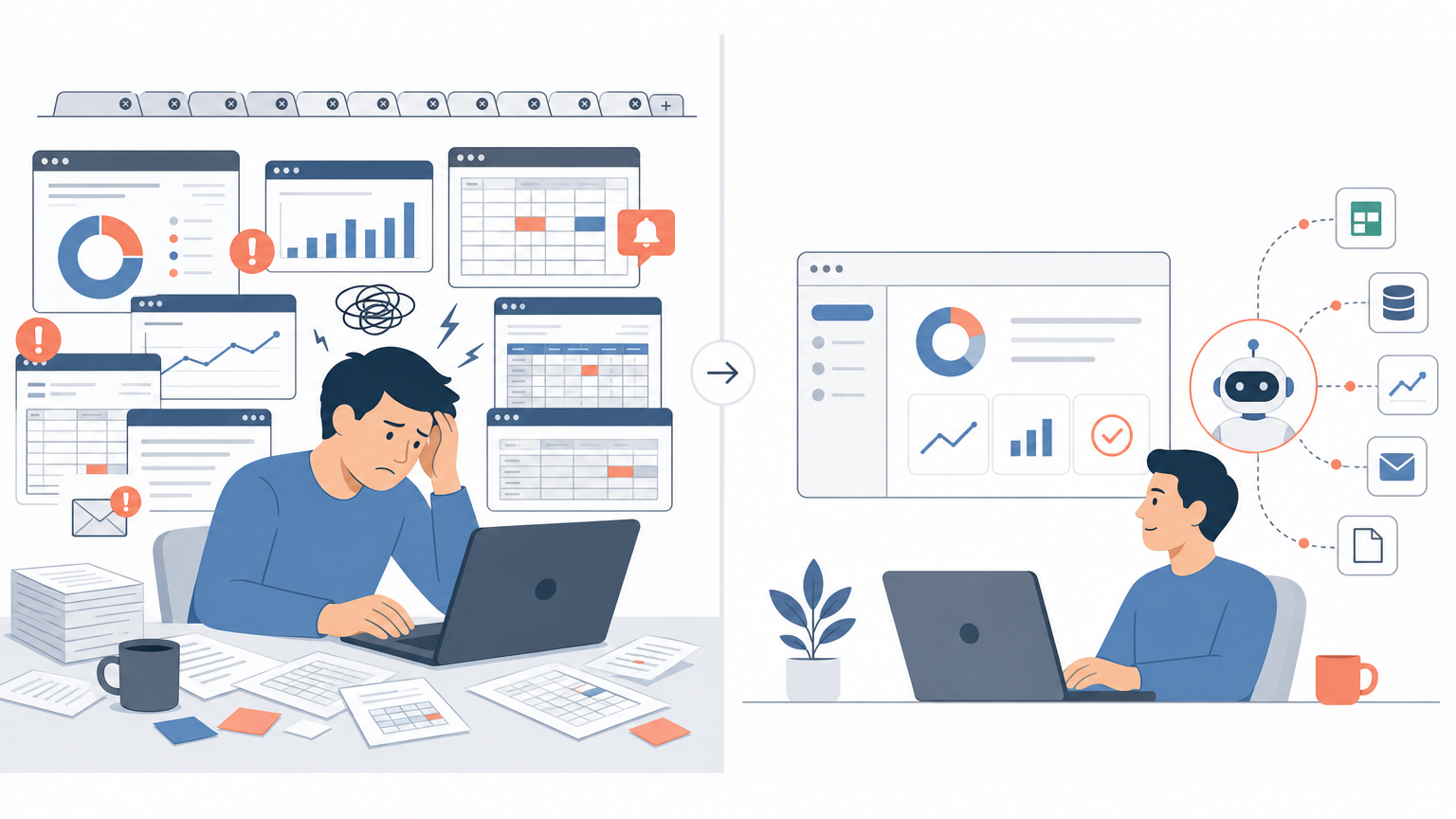
One caveat: if you're spending a few thousand a month across two campaigns, manual management is fine. The leverage kicks in when complexity exceeds what a single person can hold in working memory — multiple platforms, multiple markets, dozens of creatives in rotation, budgets that need to shift dynamically.
2. "Can I trust the data?"
The concern is valid. LLMs hallucinate. If an agent makes decisions on fabricated numbers, you're worse off than before.
But you need to separate two layers here.
Performance data is never generated — it's read. The numbers GrowthGPT shows you come directly from platform APIs (Meta, Google, TikTok). Same numbers you'd see in the native dashboard. No model sitting between the API response and what's displayed.
But is pulling your ad dashboard data enough? Not really.
Your ad dashboard only tells you what happened to your ads. It doesn't tell you what's happening in the market. Your CPA jumped 30% — is it your creative going stale, or is the entire category getting more expensive? Looking at your own dashboard alone, you can't tell.
That's why GrowthGPT's data architecture isn't single-source. It's multi-layer cross-validation:
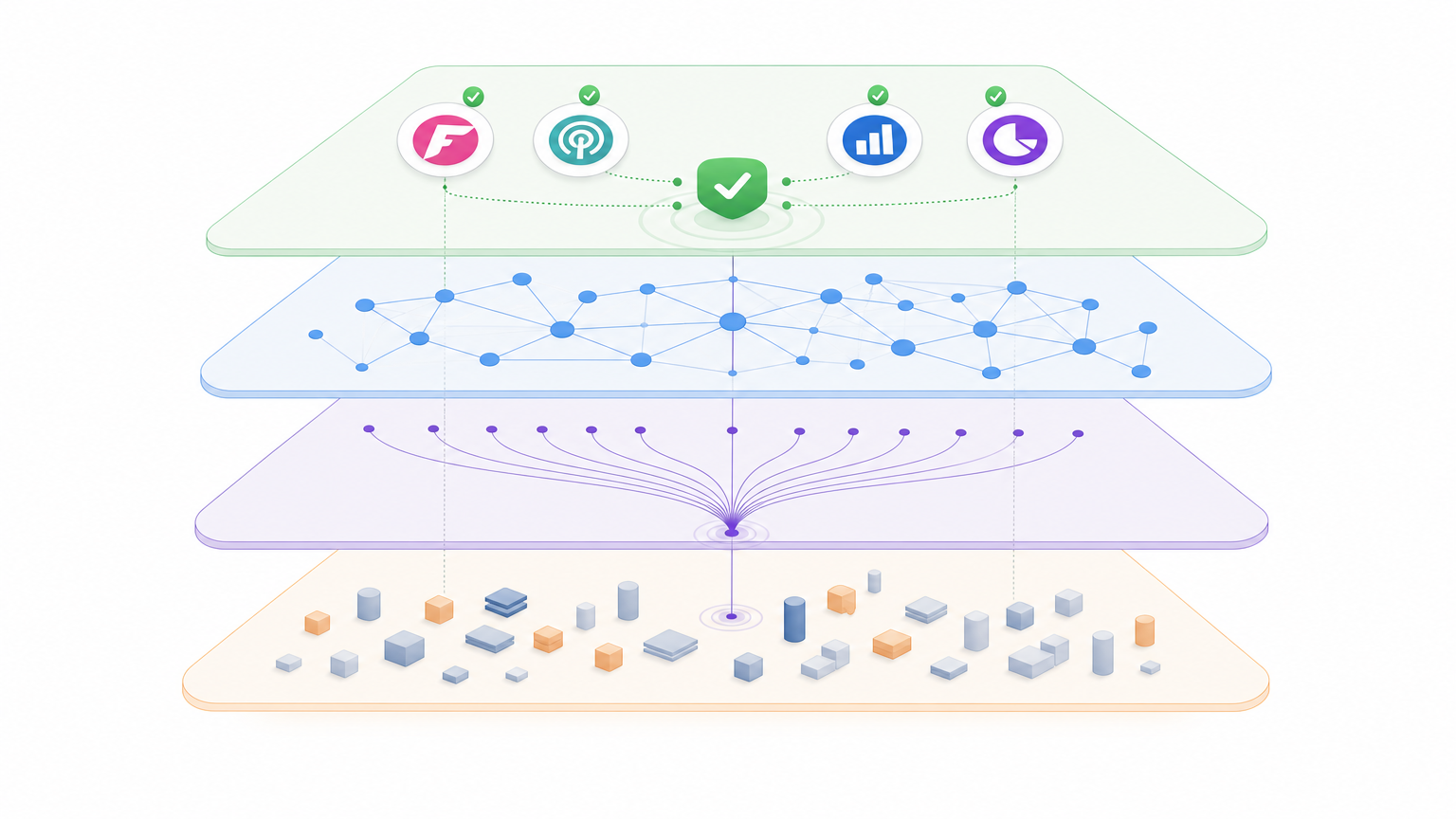
Layer 1: Platform APIs — Your account's delivery data pulled from each ad platform. The baseline facts.
Layer 2: Autonomous crawling — Beyond what APIs provide, we crawl public and semi-public market data. What creatives competitors are running, how much volume a specific video is driving, what traffic distribution looks like for a given category — things the API will never give you, but that you need for context when making decisions.
Layer 3: Reasoning engine — Both layers feed into a reasoning system. It doesn't just look at your CPA in isolation — it evaluates whether your CPA still has room to improve given the competitive dynamics and creative performance trends in your category, and where the floor likely is.
Layer 4: Third-party cross-validation — Every inference is checked against external industry data sources. Ecommerce categories are validated with Fastmoss, Kalodata, and others. Gaming and app categories use Sensor Tower, SimilarWeb, and similar platforms. It's not the AI "feeling" that the market is a certain way — it's conclusions backed by traceable sources.
In short: your ad dashboard tells you what happened. Multi-source cross-validation tells you why it happened — and what's likely to happen next.
On top of this architecture, the transparency principles:
- Every recommendation shows the specific metrics that triggered it, the thresholds crossed, and the comparison baseline
- All actions are shown to you before execution — nothing fires unless you approve (unless you've explicitly turned on auto-execution for a specific rule)
- Full audit trail — every decision point logged and traceable
The real question isn't "is the data accurate?" It's: "Does this system see enough data, from enough sources, with reasoning I can actually inspect?" If the data is verified across multiple sources and the reasoning is transparent — you can verify. And if you can verify, trust builds.
3. "Everyone's building agents — why don't I just build my own?"
You can. But do the real cost math first.
Yes, the building blocks are on the table. LLMs have APIs. Ad platforms have APIs. A solid engineer can wire up a "pull data → generate recommendation → push action" loop in a few weeks.
The question is what happens after the loop works.
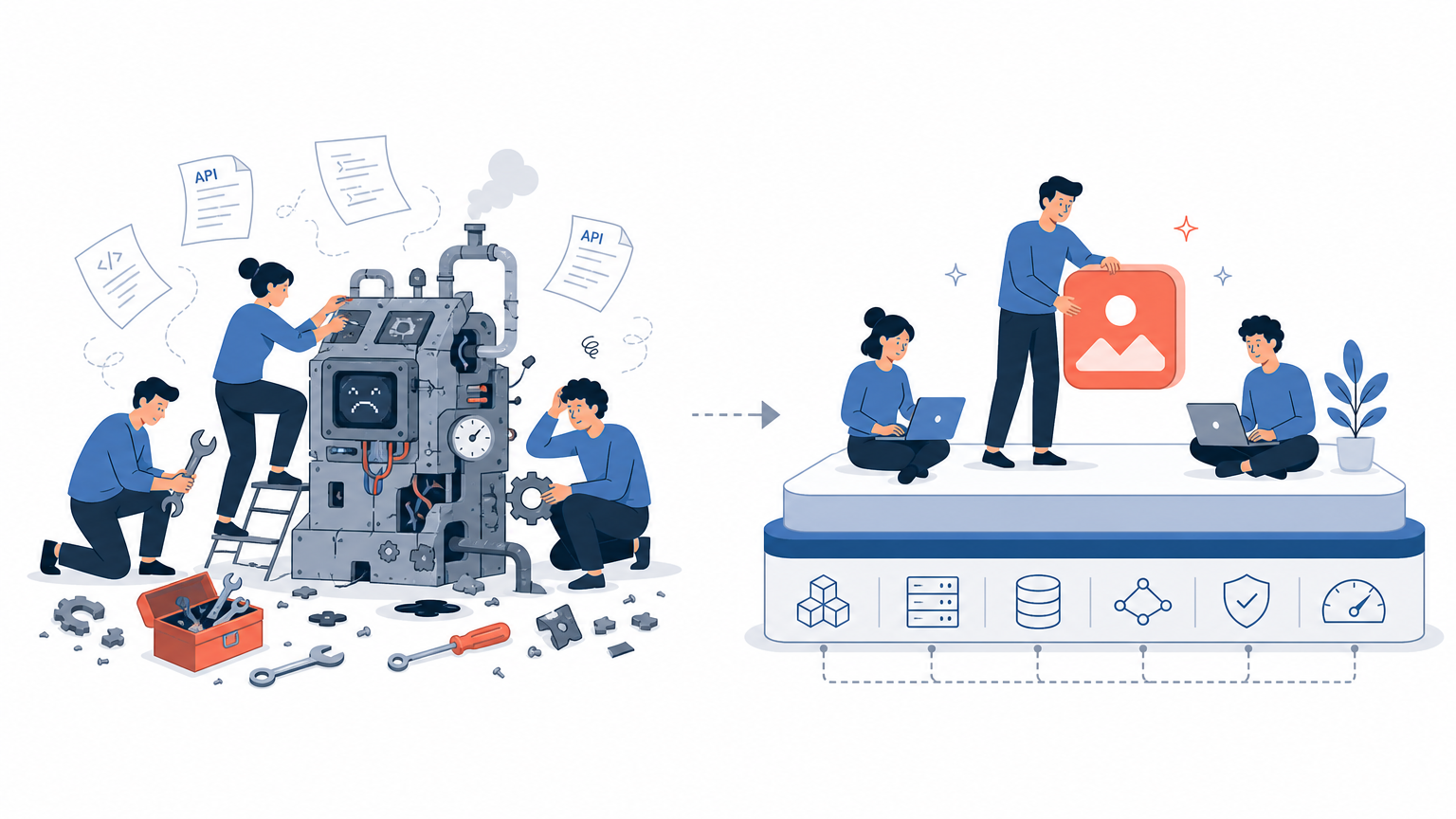
Maintenance is the real cost. Meta ships roughly 20 API changes a year. Google has its own deprecation cycles. TikTok's API is still evolving fast. Ask your engineering lead whether they'd be happy pulling people off your core product two or three times a month to fix ad-platform integration errors. It keeps happening.
Edge cases will pile up. Rate limits, data lag, attribution window mismatches, learning-phase campaigns that shouldn't be touched, cross-platform reporting discrepancies, API timeout handling. These aren't glamorous problems — but they'll show up together at 2 AM on a Friday when your spend is spiking.
You start from zero on pattern recognition. A system that has processed thousands of ad accounts knows which creative formats fatigue fastest, how much CPA fluctuation is normal noise vs. a real signal, how Meta and TikTok algorithms behave differently after budget increases. That knowledge compounds with scale — a single-company agent structurally can't build that flywheel.
Opportunity cost. Every engineering hour spent on adtech plumbing is an hour not spent on your product. The question isn't "can we build it?" — it's "is ad-platform infrastructure our core moat?"
An analogy: you could build your own payment system. Everyone uses Stripe instead. Not because payment processing is hard — but because it's infrastructure, not differentiation. A team whose entire focus is that one problem will outrun your side-build, every quarter, indefinitely.
Of course, if you have genuinely unique requirements that no external tool can satisfy, or your engineering team has real excess capacity and genuine interest in adtech — build away. For most growth teams, the math doesn't work.
What All Three Questions Are Really About
They point to one thing: control.
- "Better than in-house?" = Will I lose control of my campaigns?
- "Trust the data?" = Will I make decisions based on wrong information?
- "Why not build it myself?" = Will I be locked into someone else's roadmap?
Our answer is a design principle, not a tagline:
Amplify your control. Never absorb it.
You set the strategy. You define the rules. You draw the thresholds. You approve the actions. The agent handles what humans structurally can't — continuous monitoring, instant cross-timezone response, pattern matching across thousands of data points simultaneously.
Your judgment isn't being replaced. The bottleneck between your judgment and its execution — the one that exists because a person only has so many hours in a day — is being removed.
Try It Yourself
GrowthGPT is self-service. Connect your ad accounts, run your first diagnostic, set your first automation rules — 15 minutes.
No demo. No sales call. No onboarding process. Connect and see what it finds.