AI Skills Don't Create Capabilities
We tested a 'free' ecommerce research Skill and the agent couldn't fetch real data without paid credentials. Here's where cost, moats, and risk actually live in the agent stack.
We tested a "free" ecommerce research Skill. The result shows where cost, moats, and risk actually live in the agent stack.
TL;DR
We tested a popular "free" ecommerce research Skill and found the agent couldn't retrieve meaningful data without paid credentials. That wasn't a bug — it exposed a pattern: Skills rarely own capabilities; they route requests to underlying services that do. This makes cost easier to hide behind a clean interface while shifting margin back to API and data providers. The bigger risk isn't hype — it's treating Skills as harmless add-ons when they often touch credentials and run with agent-level privileges.
What did we test, exactly? (A reproducible protocol)
We ran a simple test designed to distinguish capability from interface.
Test setup (minimal, repeatable):
- Start a fresh agent session (no stored credentials).
- Install a widely recommended ecommerce research Skill.
- Ask for non-trivial, falsifiable output that requires real underlying data (e.g., market size signals, product-level metrics, competitor benchmarks — anything the agent cannot truthfully "guess").
- Watch for the capability boundary: Does the agent fetch data, or does it narrate a workflow?
- Record the failure mode: missing auth, paywall, quota, blocked endpoint, "no access," or placeholder outputs.
This protocol intentionally avoids subjective judgments like "the output looked smart." It only asks: did the system gain a new capability, or just a new UI?
What happened when the Skill tried to fetch real data?
The agent did what modern models do well: it planned, explained, and formatted.
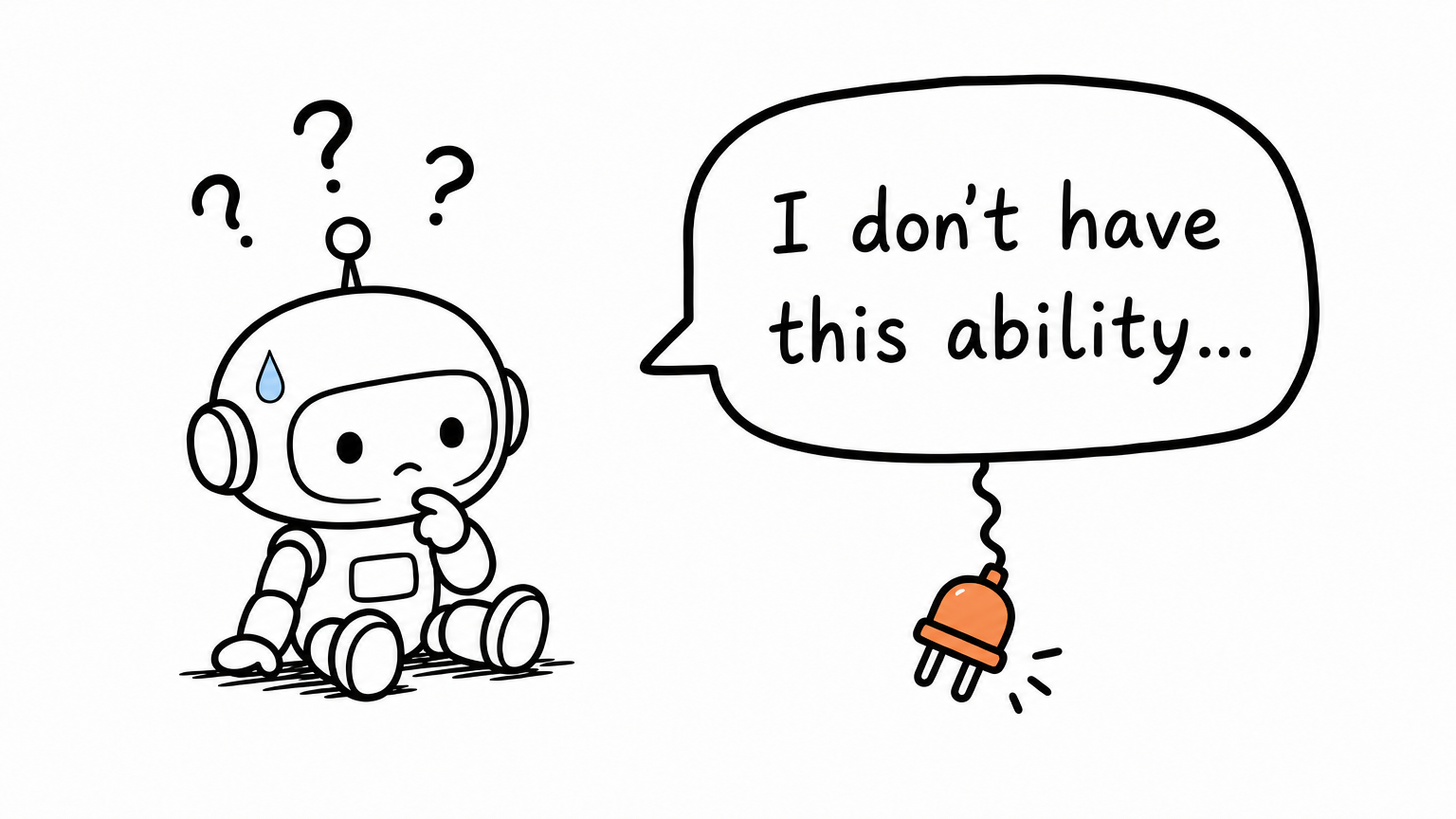
But at the moment where real data had to come from somewhere, it hit an access boundary and effectively responded: "I don't have access / I don't have this ability…" — pointing to missing credentials or subscription access behind the scenes.
That result is easy to misread as an "AI limitation." It's more precise to call it an ownership boundary:
A Skill is the menu, not the kitchen. The menu can look impressive. But if the kitchen is paid, closed, or missing, nothing comes out.
What is an AI "Skill," operationally (not marketing)?
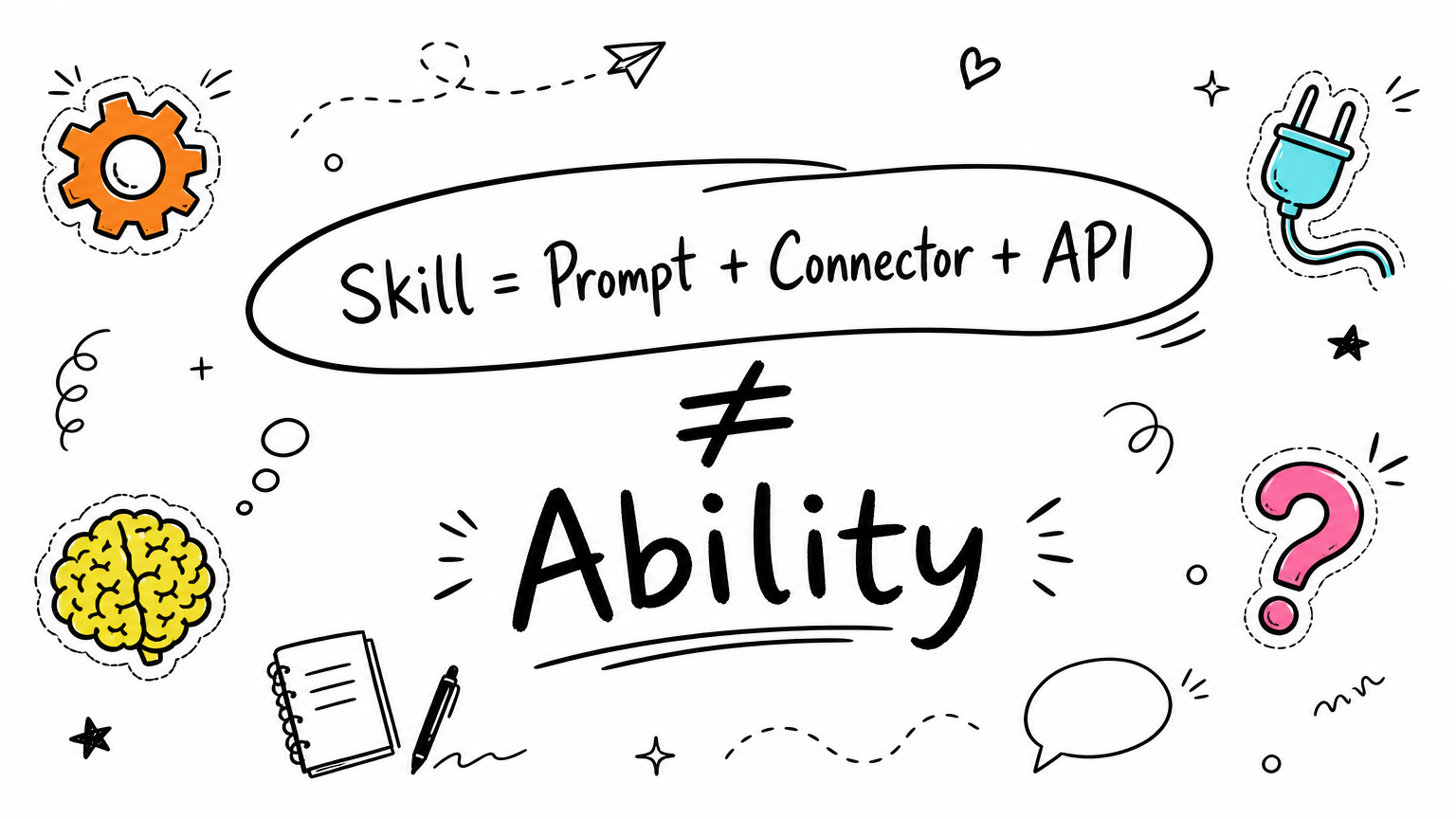
In most ecosystems, a Skill is a small stack:
- Instructions (how to interpret intent)
- Connector (how to call an API / run automation)
- Formatting (how to present results)
What it usually is not: the underlying dataset, compute, or execution rights.
So the Skill can change:
- how easy something feels
- how fast you can request it
- how nicely results are structured
But it typically cannot change:
- who owns the data
- who enforces rate limits
- who charges for usage
- what permissions are required to execute
How can you tell whether a Skill actually "owns" a capability?
Here's the most reliable falsifiable test:
Remove the Skill. Whatever capability disappears was never the Skill's capability to begin with.
That capability lived in a dependency:
- a paid data provider
- a compute meter
- a platform API
- a privileged automation runtime
A lot of "free Skill" narratives blur this line on purpose (or accidentally), because the UI makes the boundary invisible — until you try to operate at real volume.
Why keep LinkFox as the anchor (instead of burying it as "just an example")?
Because it's the fastest way to turn a principle into a believable claim.
Here's the pattern many tutorials imply:
Install a Skill → unlock ecommerce research
What the system often does in practice:
Install a Skill → route requests to a paid capability layer → results only exist if access exists
LinkFox is simply a clean, concrete instance of the general rule:
- the Skill doesn't "invent" research capability
- it forwards your query to an underlying service that already had the capability
- without paid access, the agent can describe the workflow but can't deliver the dataset
So the right question isn't "Is the Skill free?" It's:
Is the underlying capability free at the volume and fidelity you need?
What changed in the economics when AI made interface cheap?
The interesting story isn't "Skills cost money." Many don't.
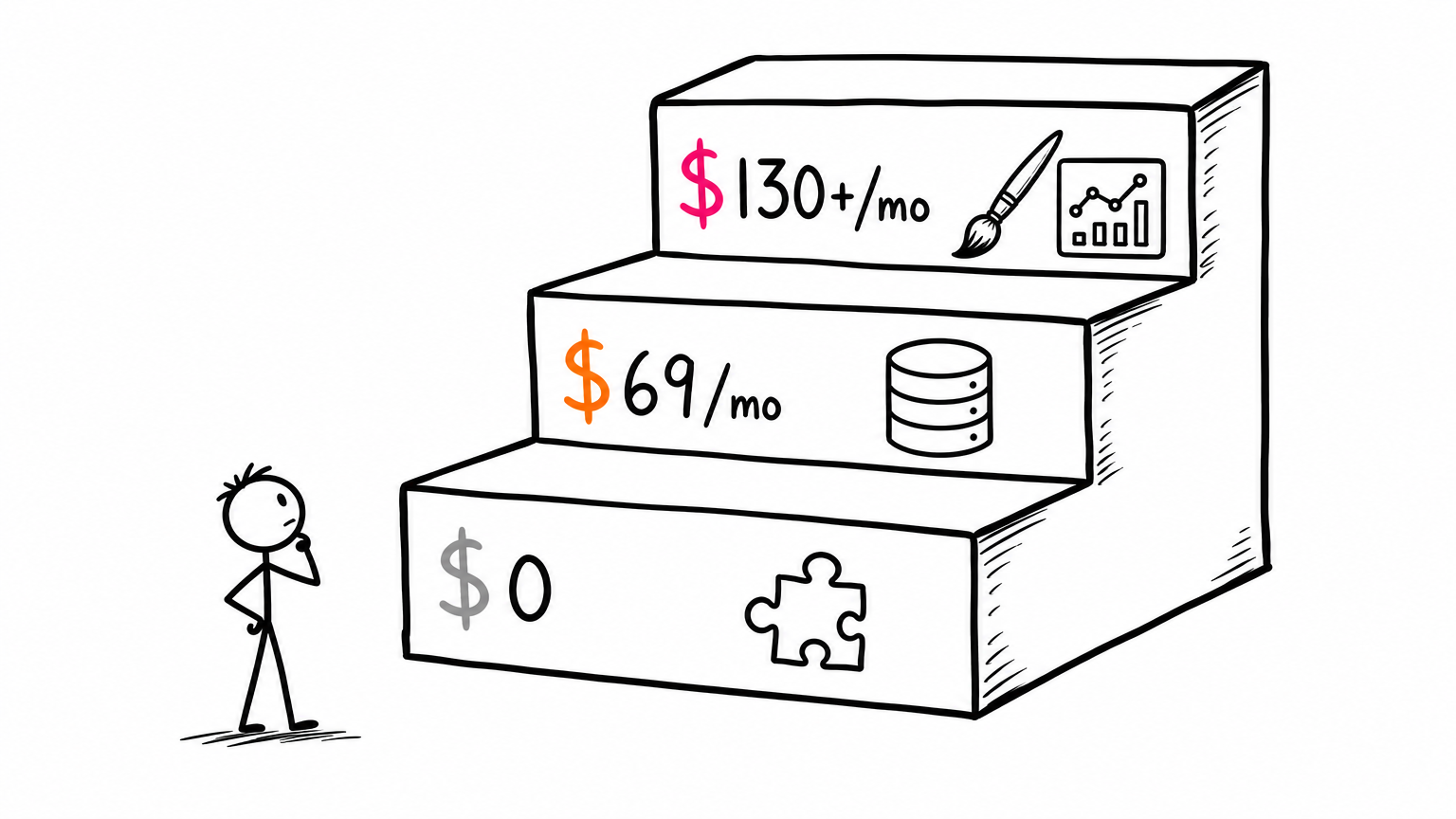
The story is where profit concentrates when interface becomes cheap and abundant.
Before:
Website / App UI → SubscriptionAfter (agent stack):
LLM → Skill (interface) → API (capability) → Subscription / usage billingTwo outcomes follow:
- Distribution is commoditized. Wrappers are cheap to ship. Many Skills will look similar because "prompt + connector" is easy to replicate.
- Moats move back to the capability layer. Value concentrates where scarcity still exists:
- proprietary data
- execution permissions (write-access beats "insights")
- reliability, compliance, and auditability
- pricing power (quotas, rate limits, metering)
- workflows that actually run end-to-end
This also explains why "free Skill lists" degrade over time: they confuse interface availability with capability ownership.
Why is Skill security a bigger deal in agent workflows than in normal plugins?
"Treat Skills like dependencies" is correct but incomplete.
A modern agent often has:
- memory
- planning
- long-running tasks
- browser control
- filesystem/workspace access
- tool execution
That means a Skill can sit inside a runtime with more leverage than a typical browser extension. The blast radius is bigger because the agent can:
- act over time (not just one click)
- access more surfaces (not just one page)
- retain context (sometimes including secrets)
So the practical rule becomes:
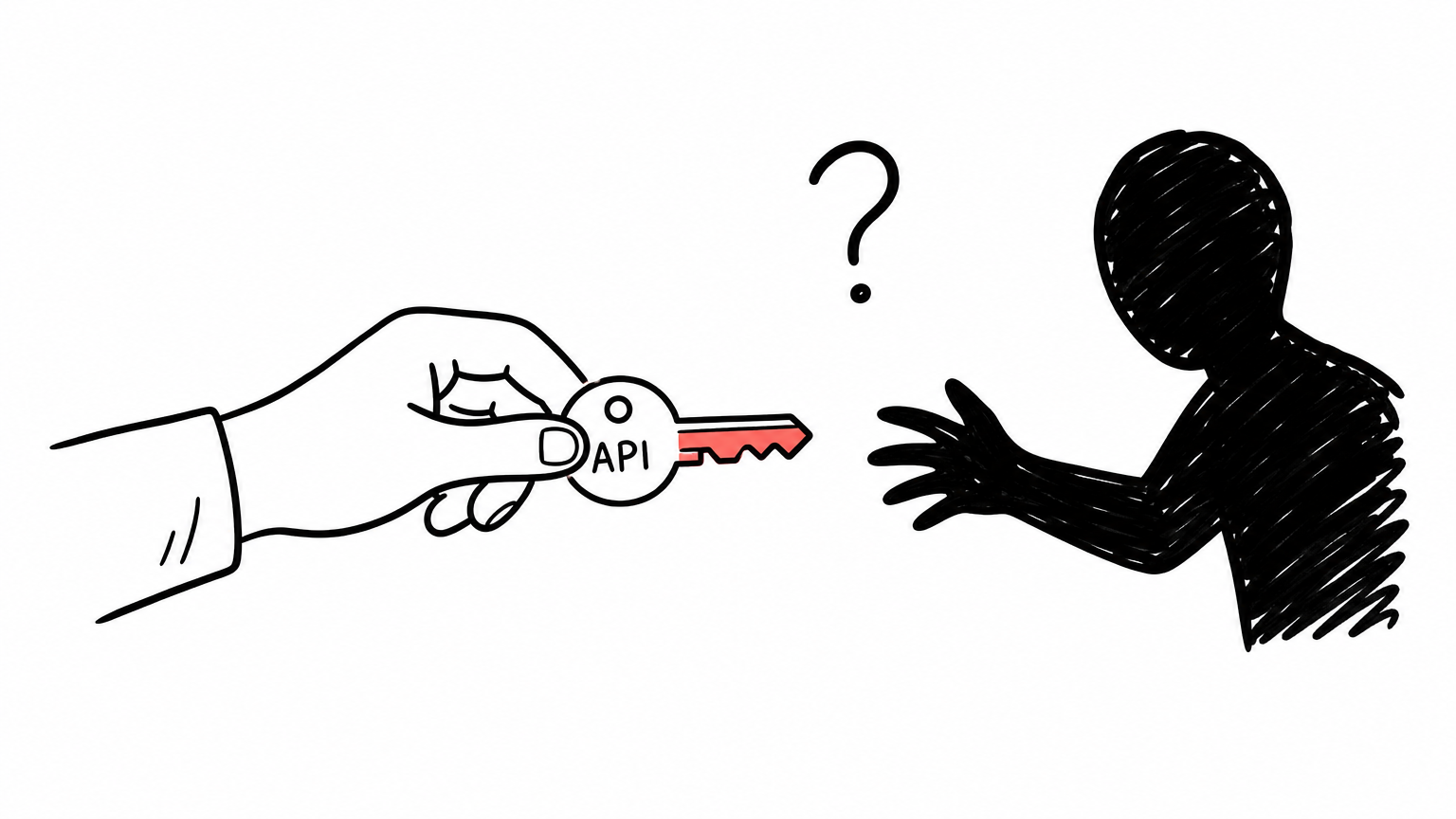
If a Skill touches keys/sessions/tokens, treat it as a supply-chain dependency inside a privileged runtime — until proven otherwise.
How do you evaluate any "free Skill" in 3 minutes?
Ask three questions:
- Where does the capability live? Name the underlying service. If you can't, you're looking at an interface demo.
- What does it require at scale? Subscription, API key, credits, quotas, rate limits — this is the real cost model.
- What permissions does it touch? Sessions, tokens, credentials, files, memory — each one changes the risk class.
This reframes "AI hype" into an operational audit:
Who owns the capability, who charges for it, and what do you have to trust to use it?
What's the principle worth remembering?
The test wasn't about LinkFox.
It was a way to make a broader rule visible:
- Skills can make software easier to access.
- Skills rarely create the underlying capability.
- Cost, moats, and risk still live where the capability lives.
If you're building with agents, optimize for what survives interface shifts:
- the underlying capability provider
- unit economics behind the API
- the trust model of your toolchain
- the execution path from intent → measurable outcome
FAQ
Are AI Skills useless then? No. Skills are great interfaces: they reduce friction, standardize workflows, and make capabilities easier to access. The point is simply that the underlying capability (data, execution rights, compute) still lives in the downstream service — so you should evaluate cost, reliability, and permissions there.
What's the fastest way to tell if a Skill "adds" real capability? Remove it. If the capability disappears, it wasn't the Skill's capability. Then identify what dependency actually powered the result (API provider, data vendor, platform auth, automation runtime).
What's the biggest risk teams underestimate? Permissions. In an agent workflow, a Skill may touch credentials, sessions, files, or memory. Treat it like a supply-chain dependency: scope access, rotate keys, and avoid granting broad permissions to untrusted publishers.