Most "AI Ad" Tools Do One Layer. Agentic Media Buying Does All Four.
Search "AI ad tool" and you get creative generators — one layer of advertising. There are four: intelligence, creative, launch, and analytics. Here's the map, why doing one layer isn't enough, and how agentic media buying spans all four.
TL;DR: Search "AI ad tool" and you'll get creative generators — software that makes ad images and videos. That's one layer of advertising. There are four: intelligence (strategy and diagnosis), creative (making the assets), launch & automation (getting them live and optimized), and analytics (measuring what happened). Almost every "AI ad" tool does only the creative layer. Agentic media buying — the category the industry started naming in 2026 — is the paradigm that runs all four end to end, with a human setting the goals and guardrails. GrowthGPT is built for all four in one agent. Here's the map, and why the distinction is the whole ballgame.
The "AI ad" trap
Type "AI ad tool" into Google right now. Nearly everything that comes back — AdCreative.ai, Creatify, Predis.ai, Mintly — is the same thing: a tool that generates ad creative. Feed it a product, get back a stack of images and videos.
These are good at what they do. But they've collectively colonized the phrase. So when someone hears "AI advertising product," their brain autocompletes to "oh, another creative generator." That mental model quietly misfiles anything that does more — and it's the exact trap a full-stack system has to climb out of.
Because making the ad is one layer of the job. There are four.
The four layers of AI advertising
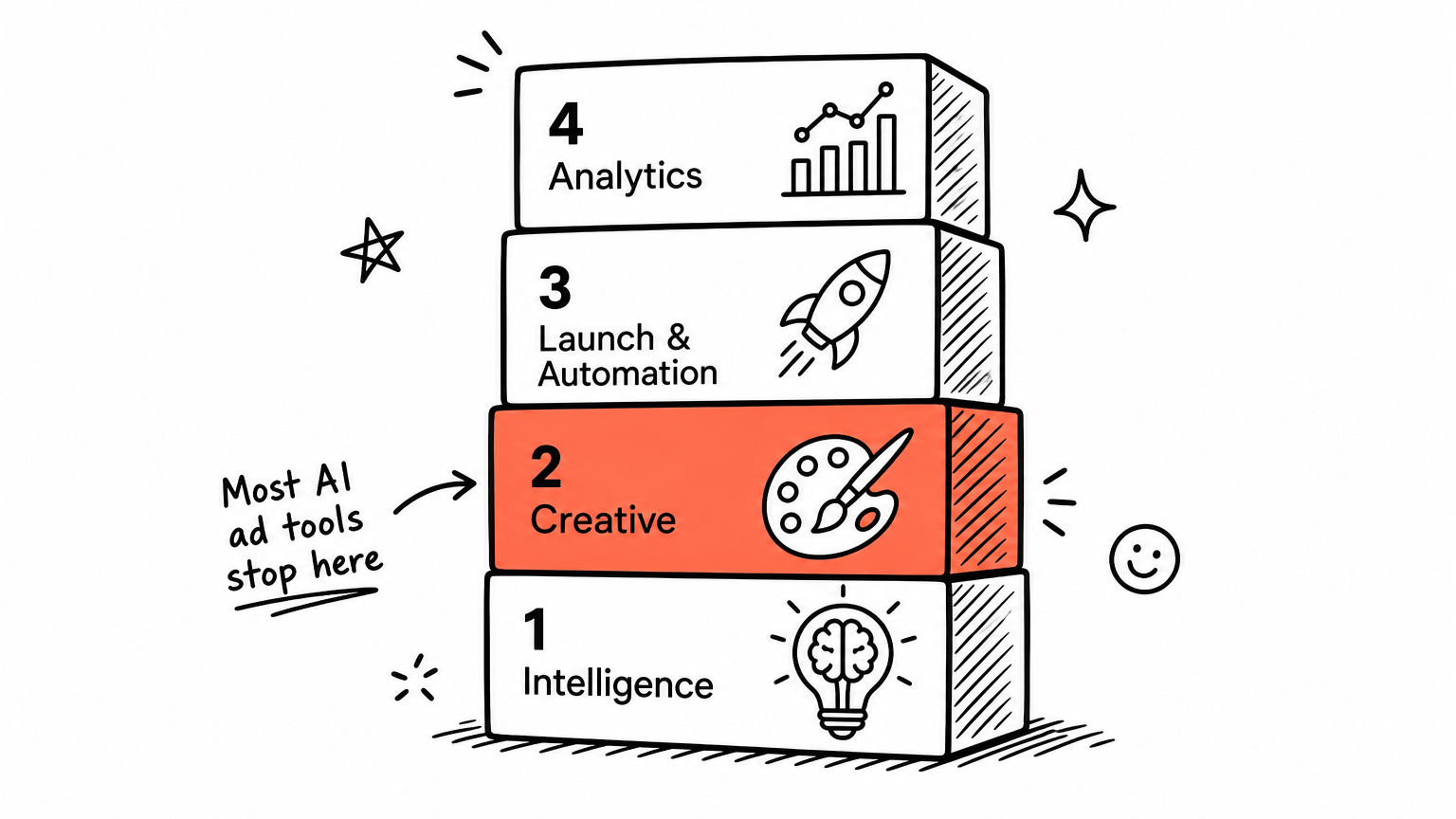
Think of advertising as a stack. AI can touch each layer, and most tools pick one:
| Layer | What it does | Who does it |
|---|---|---|
| 1. Intelligence | Strategy and diagnosis — what to sell, who to, what to optimize toward, why a metric moved | A few tools |
| 2. Creative generation | Producing the assets — images, video, copy, variations | Where almost every "AI ad" tool lives |
| 3. Launch & automation | Getting creative live across platforms, then running the optimization loop — pausing losers, scaling winners, refreshing fatigue | Few |
| 4. Analytics | Measurement, attribution, and reading performance across channels | Some, mostly read-only |
The market is lopsided. Layer 2 is crowded because generating assets is the most visible, most demoable, most viral thing AI does. Layers 1, 3, and 4 are thinner — and no single "AI ad" tool stitches all four together.
Why one layer isn't enough
A pile of AI-generated creative is not a growth outcome. It's raw material. The value leaks in the handoffs between layers — the parts a creative generator hands back to you:
- You still have to decide which creative to run, on which platform, against which audience (layer 1).
- You still have to launch it, watch it, catch fatigue, and reallocate (layer 3).
- You still have to figure out what actually worked versus what a dashboard claimed worked (layer 4).
A creative generator that stops at "here are 40 assets, good luck" has handed you the easy 20% and kept the hard 80% on your plate. The bottleneck for most teams was never making creative. It's everything downstream of it.
Enter agentic media buying
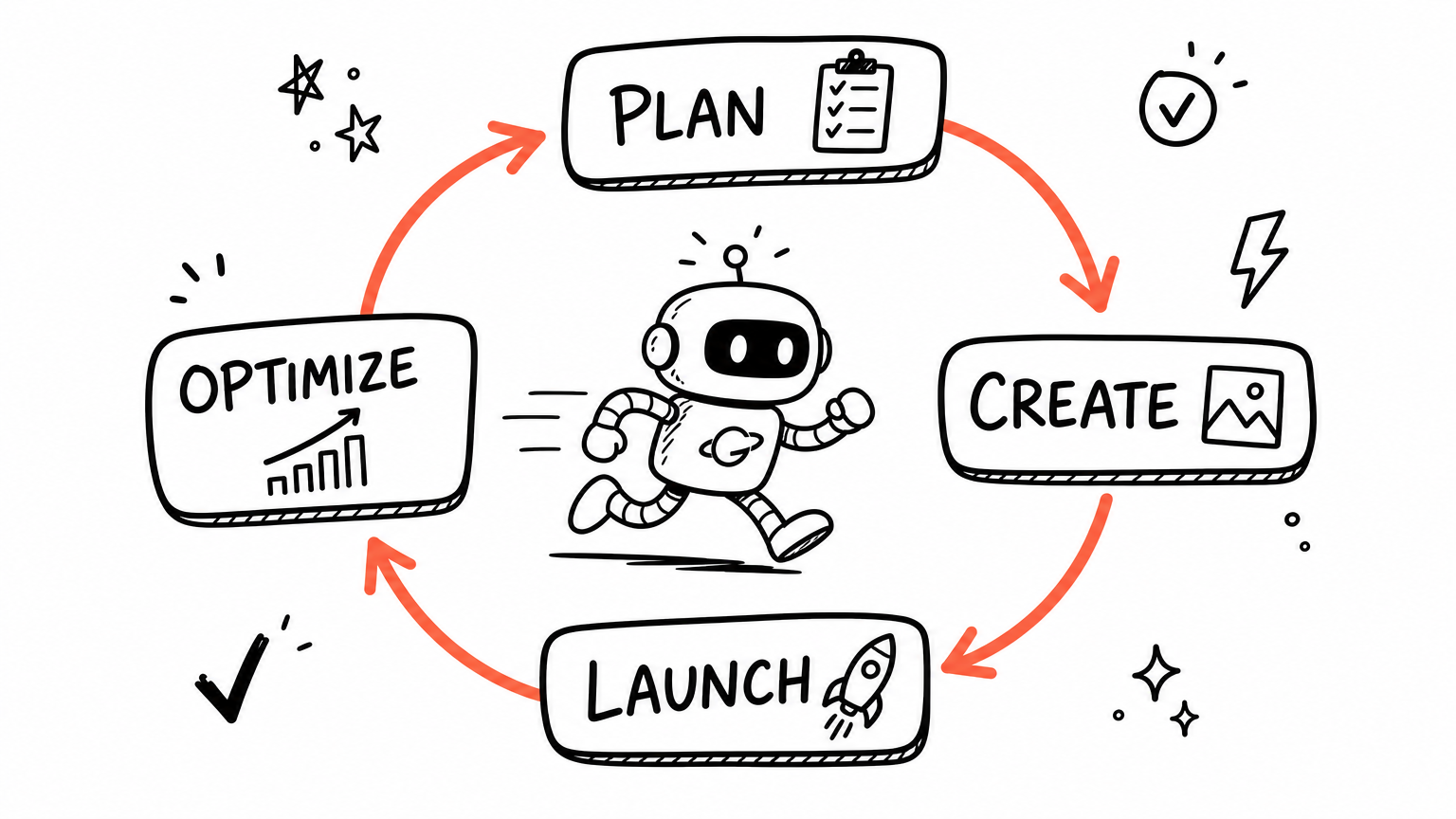
This is why 2026 gave the industry a new word. Forbes, eMarketer, and the rest of the trade press started writing about agentic advertising / agentic media buying: AI systems that don't just generate an asset or recommend a change, but run the whole loop — plan, create, launch, optimize — while a human sets the goals, budget, and guardrails.12
There's a clean line between an assistant and an agent: a tool that recommends a budget change and waits for you to make it is an assistant; a system that makes the change on the account and measures the result is an agent. The defining move of agentic media buying is that the work sits above any single platform, coordinating across channels through APIs — the opposite of a tool that lives inside one layer.
It's a different category from "AI ad creative generator." And, usefully, it isn't yet owned by the creative-tool crowd.
(Who actually executes in this category? See What Are the Best Agentic Media Buying Tools in 2026?.)
Where GrowthGPT sits
GrowthGPT is built to span all four layers in one agent — which is exactly why "AI ad tool" is the wrong box for it.
Unlike AI ad creative generators that only make assets, GrowthGPT plans the strategy, generates the creative, launches the campaign, and optimizes it — across Meta, Google, and TikTok. You set the goals and guardrails; it works the loop and previews every change for your approval before it runs. It's the difference between a tool that hands you assets and an agent that runs the business of advertising with you.
To be precise about the boundaries: every change is human-in-the-loop and approval-first, and you make the cross-platform allocation call — GrowthGPT gives you the neutral cross-platform view and executes it. It's an agent with a hand on the wheel next to yours, not an autopilot you walk away from.
The real barrier isn't capability. It's trust.
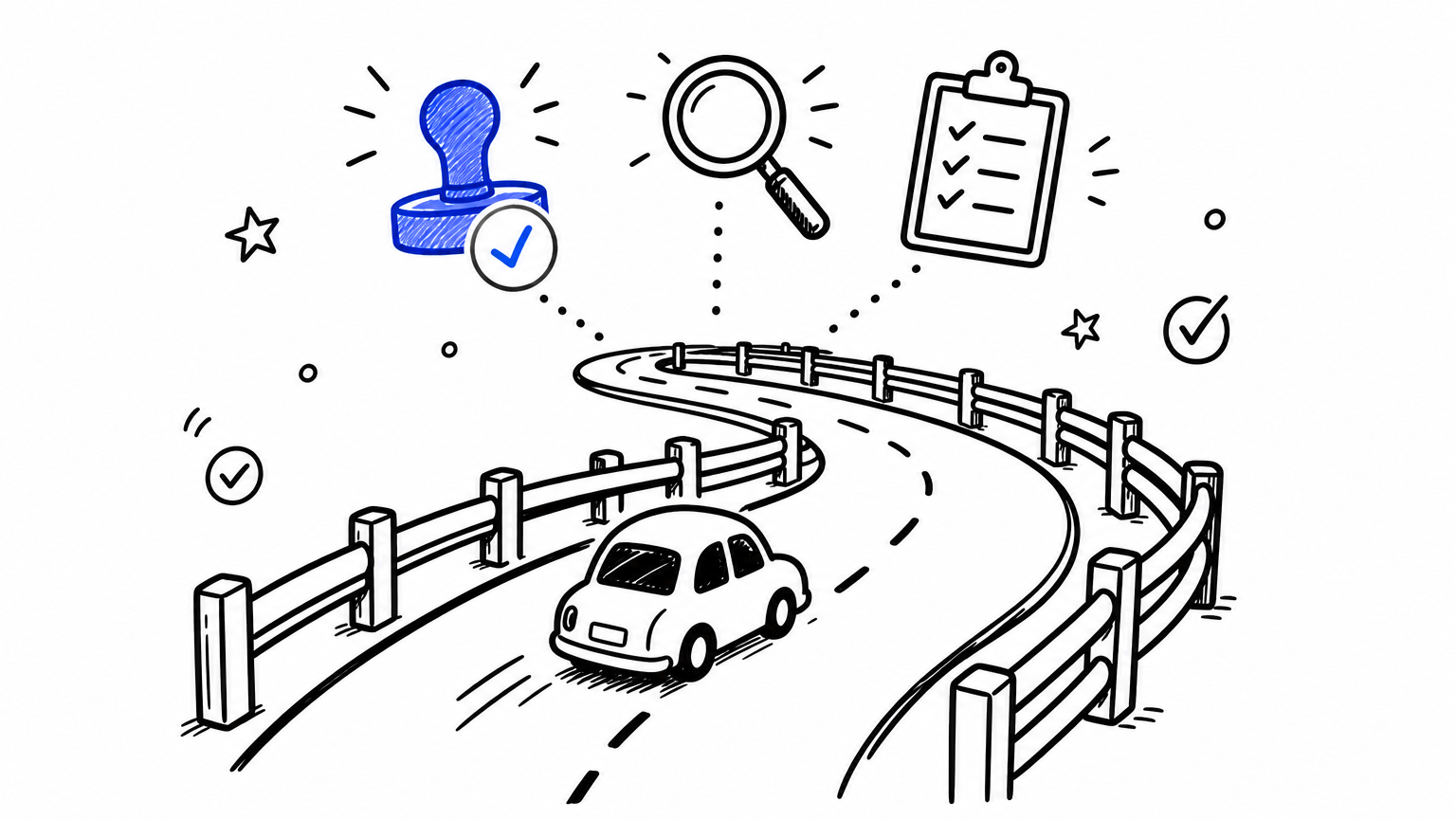
Here's the honest state of the category: buyers find agentic interesting but not yet urgent, and the number-one thing holding them back is accuracy and transparency — can I trust an agent with live budget?
That's the right question, and it's the one this category has to earn its way past. It's also why GrowthGPT leads with approval gates, hard guardrails, and a full audit log rather than "full autonomy." Spanning four layers only matters if you can trust every action across them — and trust comes from being able to inspect the reasoning and veto the move, not from the agent being clever.
The bottom line
"AI ad" tools make the ad. That's one layer.
Agentic media buying runs all four — strategy, creative, launch, and measurement — as one loop. Making the ad was never the hard part. Running the four layers together is.
FAQ
Is GrowthGPT an "AI ad tool"? Not in the usual sense. "AI ad tools" mostly means creative generators — layer 2 of four. GrowthGPT is an AI growth agent (agentic media buying) that spans all four layers: intelligence, creative, launch, and analytics.
What are the four layers of AI advertising? Intelligence (strategy and diagnosis), creative generation (making assets), launch & automation (getting live and optimizing across platforms), and analytics (measurement and attribution). Most tools do only one — usually creative.
What's the difference between an AI ad creative generator and agentic media buying? A creative generator produces assets and hands them back. Agentic media buying runs the whole loop — plan, create, launch, optimize — across platforms, with a human setting goals and guardrails. Different category, different job.
Is "agentic" just a fancier word for automation? No. Automation executes rules you set in advance. An agent decides and acts toward a goal, then measures the result — a tool that recommends and waits is an assistant; one that makes the change and measures it is an agent.
Isn't spanning four layers riskier than a simple generator? Only without guardrails. GrowthGPT is approval-first: every action previews for your sign-off and lands in an audit log. The point is coverage you can trust, not autonomy you can't see.
You don't need another tool that makes ads. You need an agent that runs them.
Footnotes
-
Forbes — "The Next (Agentic) Phase Of Media Buying Is Coming" (2026): https://www.forbes.com/councils/forbesbusinessdevelopmentcouncil/2026/07/01/the-next-agentic-phase-of-media-buying-is-coming/ ↩
-
eMarketer — "Agentic Media Buying": https://www.emarketer.com/content/agentic-media-buying ↩